What Is Taraweeh Prayer?
Taraweeh is the special night prayer performed during the month of Ramadan after the Isha prayer. The word "Taraweeh" comes from the Arabic root "rawaha," meaning to rest, because worshipers would take brief breaks between sets of prayers due to the length of the recitation. It is a beloved sunnah (practice of the Prophet) that transforms Ramadan nights into opportunities for extended worship, Quran recitation, and spiritual closeness to Allah.
The Prophet Muhammad (peace be upon him) said: "Whoever stands in prayer during Ramadan out of faith and seeking reward, all their previous sins will be forgiven" (Bukhari and Muslim). This hadith is understood by the majority of scholars to refer to Taraweeh prayer, making it one of the greatest opportunities for forgiveness available to the Muslim.
The Ruling on Taraweeh
Is Taraweeh Obligatory?
Taraweeh is a strongly emphasized sunnah (sunnah mu'akkadah), not an obligation (fard). The Prophet (peace be upon him) prayed it in congregation for a few nights and then stopped, fearing it might become obligatory on the Ummah. He said: "I feared that it would be made obligatory upon you" (Bukhari). During the caliphate of Umar ibn al-Khattab (may Allah be pleased with him), he gathered the Muslims behind a single imam for Taraweeh, establishing the congregational practice we know today.
Should It Be Prayed in Congregation?
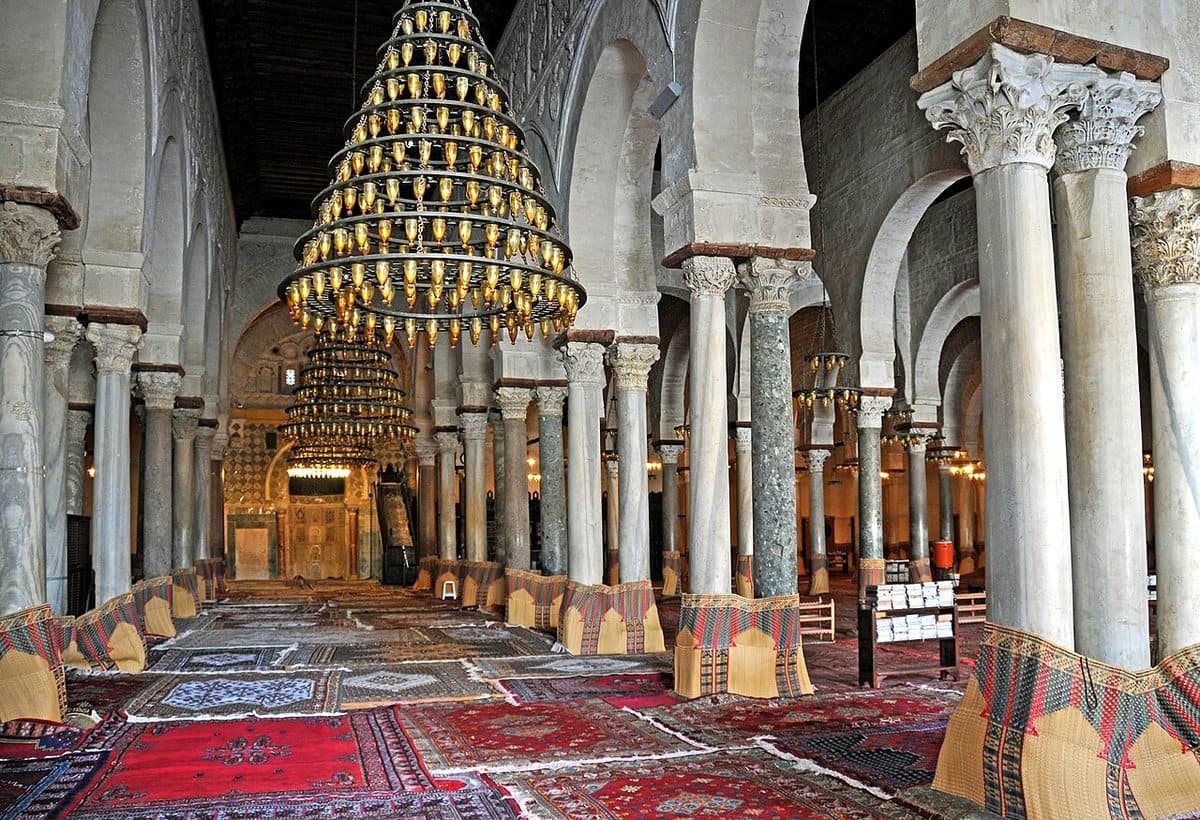
While Taraweeh can be prayed individually at home, praying it in congregation at the mosque is preferred and carries greater reward. Umar's establishment of the congregational Taraweeh is considered one of his greatest contributions, and it has been the practice of the Muslim Ummah since his time. The communal experience of standing together in prayer, listening to the Quran, and sharing the spiritual atmosphere of Ramadan nights is one of the most cherished aspects of the month.
How Many Rak'ahs?
The Scholarly Discussion
The number of rak'ahs for Taraweeh is one of the most discussed topics in Islamic jurisprudence. There are two main positions:
Twenty rak'ahs plus Witr: This is the position of the Hanafi, Shafi'i, and Hanbali schools, and it is the practice attributed to Umar ibn al-Khattab and the companions. In Morocco, following the Maliki school, the common practice has historically been to pray 20 rak'ahs of Taraweeh followed by Witr, though practices vary by mosque.
Eight rak'ahs plus Witr: This position is based on the hadith of Aisha (may Allah be pleased with her), who reported that the Prophet (peace be upon him) would not pray more than 11 rak'ahs (8 plus 3 Witr) in Ramadan or outside of it (Bukhari). Many scholars, including Imam al-Albani, have argued that this is the sunnah and the preferred practice.
The Moroccan Practice
In Morocco, the tradition in most mosques is to pray 8 rak'ahs of Taraweeh followed by the Shaf' (2 rak'ahs) and Witr (1 rak'ah), totaling 11 rak'ahs. Some mosques, particularly larger ones, may pray additional rak'ahs. Regardless of the number, all scholars agree that the quality of the prayer, the focus, humility, and contemplation during recitation, is far more important than the quantity of rak'ahs.
How to Pray Taraweeh Step by Step
The Basic Structure
Taraweeh is prayed in sets of two rak'ahs, with a brief rest or dhikr between each set. Here is the step-by-step process:
- Make your intention for Taraweeh prayer.
- Pray two rak'ahs just as you would any voluntary prayer, with the opening takbir, Fatiha, a portion of the Quran, ruku, sujud, and the tashahhud and salam at the end of the second rak'ah.
- Rest briefly or engage in quiet dhikr (SubhanAllah, Alhamdulillah, Allahu Akbar).
- Repeat for the desired number of sets (typically 4 sets of 2 rak'ahs for those praying 8 rak'ahs).
- Conclude with Witr prayer, typically 3 rak'ahs (2 Shaf' + 1 Witr) or as a single rak'ah.
What Is Recited During Taraweeh?
Many mosques aim to complete the entire Quran during Taraweeh over the course of Ramadan. The imam recites approximately one juz (one-thirtieth of the Quran) each night. Some mosques complete the Quran once, while others may go through it twice during the month. The recitation is a central feature of Taraweeh, as it allows the congregation to hear the entire Quran during the blessed month.
In Moroccan mosques, the quality of Quran recitation during Taraweeh is a source of great pride. Many imams are huffaz (those who have memorized the entire Quran) and recite in the beautiful Moroccan style of tajweed (proper Quranic recitation rules), often using the Warsh reading that is standard in North Africa.
The Qunoot Supplication
During the last half of Ramadan, many imams include the qunoot supplication during the Witr prayer. This is an extended dua in which the imam supplicates to Allah on behalf of the congregation, seeking forgiveness, mercy, guidance, and relief for the Muslim Ummah. The qunoot during the final nights of Ramadan is often deeply emotional, with many worshipers moved to tears by the sincerity and power of the supplication.
The Spiritual Benefits of Taraweeh
Forgiveness of Sins
As mentioned in the hadith above, consistently praying Taraweeh throughout Ramadan with faith and sincerity leads to the forgiveness of all previous sins. This is one of the most powerful promises associated with any voluntary act of worship.
Connection with the Quran
Taraweeh provides a unique opportunity to hear the entire Quran recited aloud over the course of a month. For many Muslims, this is their primary exposure to lengthy Quran passages, and it deepens their relationship with the Book of Allah in a way that individual reading may not.
Building Discipline and Consistency
Committing to Taraweeh every night of Ramadan builds spiritual discipline. After 30 nights of standing in prayer, many Muslims find that their regular prayer habit is strengthened and their connection to the mosque deepened. This discipline often carries forward beyond Ramadan.
Community and Brotherhood
The congregational nature of Taraweeh creates a powerful sense of community. Standing shoulder to shoulder with fellow Muslims, hearing the Quran together, and sharing the spiritual journey of Ramadan builds bonds that strengthen the entire community. In Morocco, Taraweeh is a family and community event, with men, women, and children all participating.
Practical Tips for Taraweeh
Preparing for the Prayer
- Perform wudu (ablution) carefully before heading to the mosque
- Wear clean, comfortable clothing that allows free movement in prayer
- Eat a moderate iftar so you are not sluggish or uncomfortable during prayer
- Arrive early to get a good spot and settle in before the prayer begins
During the Prayer
- Focus on the Quran being recited. Even if you do not understand every word, let the sound of Allah's words wash over you
- Maintain proper posture and stillness during each position of the prayer
- Use the breaks between sets to make dhikr, reflect, or sip water if needed
- If you feel faint or unwell, it is permissible to sit and pray from a seated position
Making the Most of Taraweeh
- Try to follow along with a mushaf (Quran) or Quran app if you can read Arabic, to reinforce your understanding of what is being recited
- Learn the meanings of key surahs that will be recited so the experience is more meaningful
- Make personal dua during sujud (prostration), as this is one of the times when supplication is most likely to be accepted
- Encourage family members to attend and create a family tradition of Taraweeh
Taraweeh for Women
Women are encouraged to pray Taraweeh and share in the blessings of congregational worship during Ramadan. In Morocco, most mosques allocate space for women to pray Taraweeh, and many women attend regularly. The Prophet (peace be upon him) said: "Do not prevent the female servants of Allah from the mosques of Allah" (Muslim). Whether a woman prays Taraweeh at the mosque or at home, the reward is available to her.
Common Questions About Taraweeh
Can I Pray Taraweeh at Home?
Yes, Taraweeh can be prayed at home individually or in a small congregation with family members. However, praying at the mosque is preferred for the additional reward of congregational prayer and the communal spiritual experience.
What If I Miss Some Nights?
Missing some nights of Taraweeh does not invalidate the reward of the nights you did pray. Each night of Taraweeh is rewarded independently. If you miss a night due to illness, travel, or other reasons, simply resume the following night without making up the missed prayer.
Can I Hold a Mushaf During Taraweeh?
Scholars differ on this point. The Maliki school, followed in Morocco, generally permits holding a mushaf during voluntary prayers if needed, though praying from memory is preferred. If holding a mushaf helps you concentrate and follow the recitation, many scholars consider it acceptable, especially when praying at home.
What If the Imam Makes a Mistake in Recitation?
If you notice an error in the imam's recitation, it is praiseworthy to gently correct them by reciting the correct words aloud. This is known as "fatah" on the imam and is a communal responsibility. In many Moroccan mosques, designated huffaz sit near the imam to provide corrections when needed.
Conclusion
Taraweeh prayer is one of Ramadan's greatest gifts. It combines extended worship, Quran recitation, community, and the promise of divine forgiveness into a nightly practice that transforms the month into an unforgettable spiritual experience. Whether you pray 8 rak'ahs or 20, at the mosque or at home, alone or with your family, the key is sincerity, consistency, and a heart open to the words of Allah. Make Taraweeh a cornerstone of your Ramadan, and let each night of standing before Allah bring you closer to His mercy and forgiveness.