Hajj 2026: Complete Preparation Guide & Practical Tips
Hajj, the annual pilgrimage to Mecca, is the Fifth Pillar of Islam and one of the most profound spiritual journeys a Muslim can undertake in their lifetime. Performed during the month of Dhul Hijja, Hajj draws together millions of Muslims from every corner of the globe in a unified act of submission to Allah (SWT), commemorating the legacy of Prophet Ibrahim, his wife Hajar, and his son Ismail (peace be upon them all).
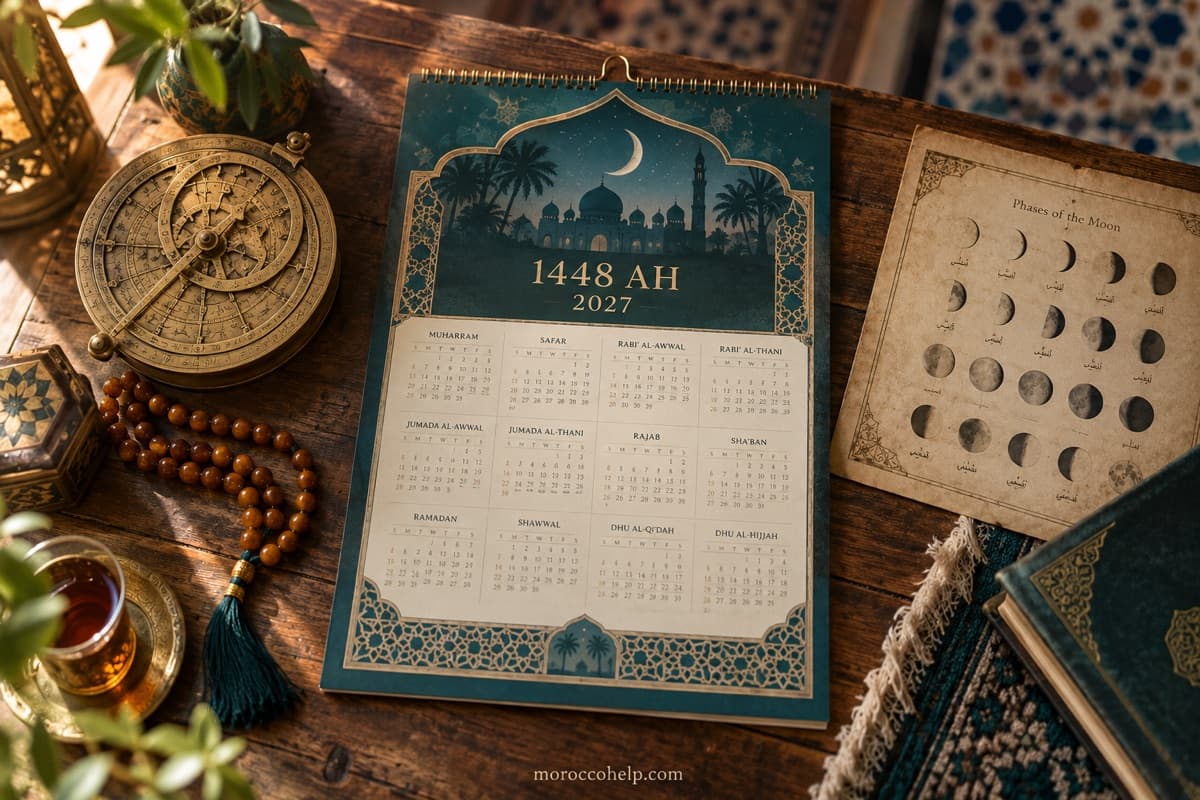
For the 1447 AH season, Morocco's Ministry of Habous and Islamic Affairs confirmed the Dhul Hijja crescent on May 17, 2026, making the rites fall in late May: 8 Dhul Hijja (Yawm al-Tarwiyah) on May 25, the Day of Arafah (9 Dhul Hijja) on Tuesday, May 26, 2026, and Eid al-Adha (10 Dhul Hijja) on Wednesday, May 27, 2026. This guide is designed for first-time pilgrims and those preparing from Morocco, offering a comprehensive overview of eligibility, the steps of Hajj, ihram rules, essential duas, and practical preparation tips.
Last updated July 2026 · Source: Ministry of Habous and Islamic Affairs (Kingdom of Morocco). The 1447 AH / 2026 quota (34,000 pilgrims), official package cost (~63,021 MAD), and digital registration upgrade reflect the Ministry's April 2026 announcement.
The Obligation of Hajj
Allah commands in the Quran:
وَلِلَّهِ عَلَى النَّاسِ حِجُّ الْبَيْتِ مَنِ اسْتَطَاعَ إِلَيْهِ سَبِيلًا ۚ وَمَن كَفَرَ فَإِنَّ اللَّهَ غَنِيٌّ عَنِ الْعَالَمِينَ
“And [due] to Allah from the people is a pilgrimage to the House, for whoever is able to find thereto a way. But whoever disbelieves, then indeed, Allah is free from need of the worlds.”
Hajj is obligatory once in a lifetime upon every adult Muslim who meets the following conditions:
Conditions of Obligation (Shurut al-Wujub)
- Islam, Only Muslims are required to perform Hajj
- Adulthood (Bulugh), Hajj performed by a child does not fulfill the adult obligation; it must be repeated upon reaching maturity
- Sanity (Aql), The person must be mentally competent
- Freedom, Historically relevant; the person must not be a slave
- Istita'ah (Ability), Financial and physical ability to undertake the journey
Financial ability means possessing enough wealth to cover the costs of travel, accommodation, and food in Mecca and Madinah, while leaving behind sufficient provision for one's dependents during the absence.
Physical ability means being in adequate health to endure the physical demands of Hajj, which involves considerable walking, standing, and outdoor exposure.
If a person is permanently physically unable to perform Hajj, they may send a representative (badal hajj) to perform it on their behalf.
Hajj 2026 from Morocco
Morocco has a formal Hajj quota system managed by the Ministry of Habous and Islamic Affairs. For the 1447 AH / 2026 season, the Ministry confirmed an official quota of 34,000 Moroccan pilgrims, accompanied by a cost reduction and a digital upgrade of the registration and accommodation process announced in April 2026. Demand consistently exceeds the quota, so pilgrims register through official channels and are selected via the Ministry's organizational system.
Key steps for Moroccan pilgrims in 2026:
- Register with your local Ministry of Habous office or authorized Hajj travel agency
- Prepare documentation: valid passport (with at least 6 months' validity beyond your return date), meningitis and required vaccinations, and completed application forms
- Attend preparatory sessions: Morocco's Habous ministry organizes educational sessions covering the rites of Hajj, health precautions, and behavioral guidelines
- Plan finances: The official Hajj package for the 2026 season is set at approximately 63,021 MAD per pilgrim (reduced from the previous season), typically covering flights, accommodation near the Haram, transport between the holy sites, and meals
The Steps of Hajj: An Overview
Hajj consists of a sequence of rites performed over five to six days (8th–13th Dhul Hijja). Here is a beginner-friendly overview:
Day 1: 8th Dhul Hijja, Yawm al-Tarwiyah
Enter Ihram from your designated miqat (entry boundary point). Pilgrims traveling from Morocco enter ihram at Rabigh (Juhfah), which is designated for people coming from North Africa and the Levant.
After making ghusl (full bath), men don two white unstitched cloths (the izar and rida), and women wear their normal modest clothes covering everything except the face and hands. Then make your intention (niyyah) for Hajj and begin reciting the Talbiyah:
لَبَّيْكَ اللَّهُمَّ لَبَّيْكَ، لَبَّيْكَ لَا شَرِيكَ لَكَ لَبَّيْكَ، إِنَّ الْحَمْدَ وَالنِّعْمَةَ لَكَ وَالْمُلْكَ، لَا شَرِيكَ لَكَ
Labbayk Allahumma Labbayk. Labbayk La Sharika Laka Labbayk. Innal Hamda Wan-ni'mata Laka Wal-Mulk. La Sharika Lak.
"Here I am, O Allah, here I am. Here I am, You have no partner, here I am. Verily all praise, grace, and sovereignty belong to You. You have no partner."
The Talbiyah is recited continuously from the point of entering ihram until the stoning of Jamarat on Eid al-Adha.
Proceed to Mina and spend the night there. This day is sometimes called "Yawm al-Tarwiyah", the Day of Quenching.
Day 2: 9th Dhul Hijja, Yawm Arafah
This is the most critical day of Hajj. The Prophet (PBUH) said: "Hajj is Arafah."
After Fajr prayer in Mina, pilgrims proceed to the Plain of Arafah. They must be within the boundaries of Arafah from after midday (Dhuhr) until sunset. The period of standing (wuquf) at Arafah is the essential pillar of Hajj, missing it means Hajj is invalid.
At Arafah, pilgrims combine Dhuhr and Asr prayers (shortened and combined), and spend the afternoon in dua, dhikr, istighfar, and Quranic recitation. This is the pinnacle of the spiritual journey.
The Prophet (PBUH) made dua at Arafah with raised hands until sunset, and his face was turned toward the Qiblah. The most beloved dua of that day is:
"La ilaha illallahu wahdahu la sharika lah, lahul mulku wa lahul hamdu wa huwa ala kulli shay'in qadir."
"There is no god but Allah, alone without partner. To Him belongs the dominion and all praise, and He has power over all things."
After sunset, proceed to Muzdalifah without performing Maghrib yet.
Night of 9th–10th Dhul Hijja, Muzdalifah
At Muzdalifah, combine and perform Maghrib and Isha prayers, then spend the night (or at least part of it) resting. Collect 49 or 70 pebbles here for the stoning of the Jamarat over the following days.
Those who are elderly, ill, or accompanying weak persons may leave Muzdalifah after midnight with a fatwa permitting this. Most pilgrims depart before dawn to return to Mina.
Day 3: 10th Dhul Hijja, Eid al-Adha
This is the busiest and most demanding day. Four major rites occur:
- Rami (Stoning of Jamarat): Stone the Jamrat al-Aqabah (the large pillar) with 7 pebbles, saying "Allahu Akbar" with each throw
- Nahr (Sacrifice): Arrange for the udhiya (sacrificial animal) to be slaughtered, which can now be done through the Hajj authority
- Halq or Taqsir (Shaving or shortening the hair): Men shave or cut their hair; women trim a fingertip's length
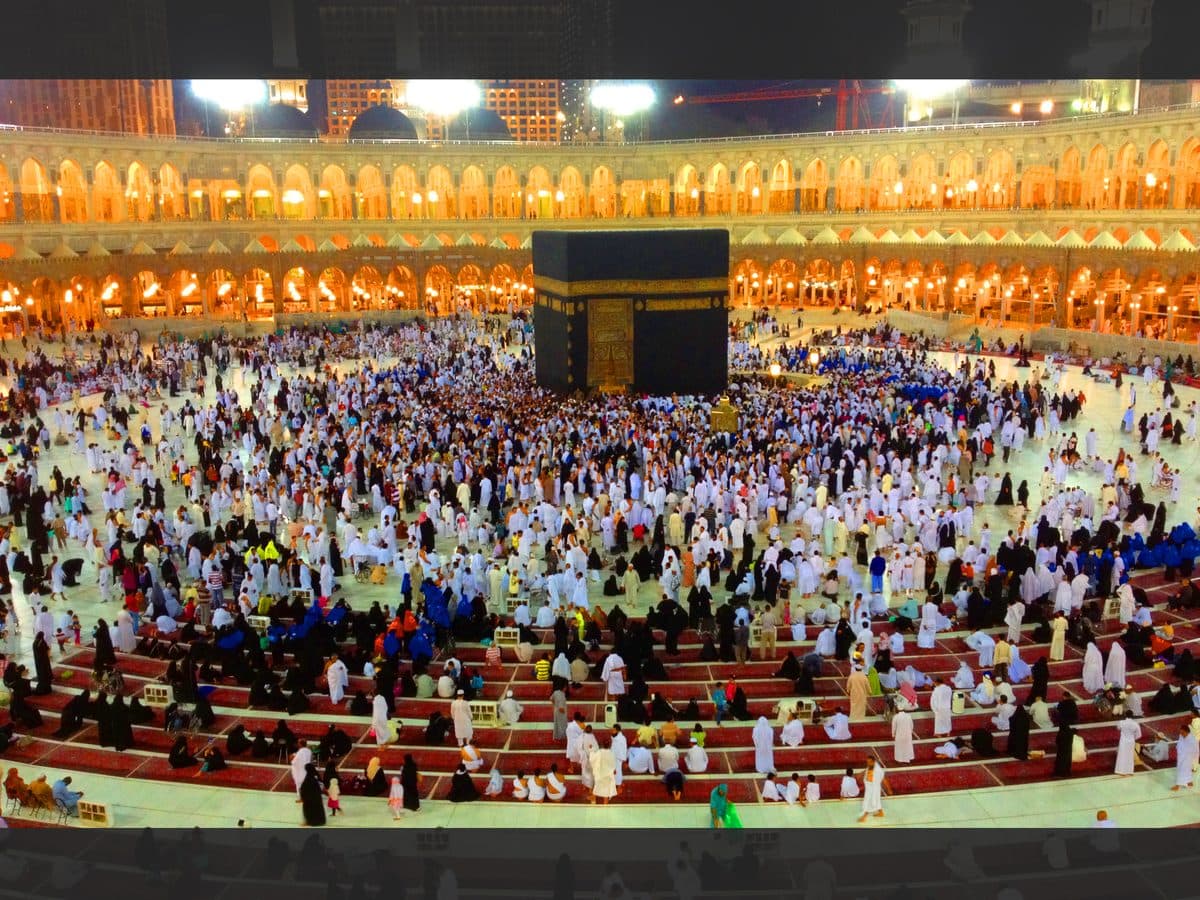
- Tawaf al-Ifadah: Perform tawaf (7 circuits around the Kaaba) and Sa'i (7 rounds between Safa and Marwa)
After completing the tawaf and sa'i, partial ihram restrictions are lifted, except relations with one's spouse, which are lifted after Tawaf al-Ifadah. Return to Mina for the night.
Days 4 & 5: 11th–12th Dhul Hijja, Ayyam al-Tashriq
Stone all three Jamarat (Sughra, Wusta, and Aqabah) with 7 pebbles each, after midday each day. Spend nights at Mina.
Those who wish to leave early may depart Mina before sunset on the 12th (the shorter stay, or Nafr al-Awwal). Those who stay until the 13th perform one more round of stoning and then depart, this is the more complete form.
Farewell Tawaf (Tawaf al-Wida)
Before leaving Mecca, every pilgrim must perform the Farewell Tawaf, 7 final circuits around the Kaaba. This is the concluding act of Hajj. The Prophet (PBUH) said: "Let none of you depart until his last act is [tawaf around] the House." — (Muslim)
Ihram Rules: What Is Forbidden
While in the state of ihram, the following are prohibited:
For both men and women:
- Cutting hair or nails
- Wearing perfume or using scented products
- Sexual relations or intimate physical affection
- Hunting or harming animals
- Engaging in arguments, obscenity, or quarreling
For men only:
- Wearing stitched clothing
- Covering the head (men must keep their heads uncovered)
For women only:
- Wearing face veils (niqab), though the face must be covered if strange men are nearby, using the edge of the khimar without it touching the face
- Wearing gloves
Essential Duas for Hajj
Upon seeing the Kaaba for the first time:
Allahumma zid hadhal bayta tashrifan wa ta'dhiman wa takriman wa mahabatan.
"O Allah, increase this House in honor, veneration, nobility, and reverence."
During Tawaf:
Subhanallahi wal hamdu lillahi wa la ilaha illallahu wallahu akbar wa la hawla wa la quwwata illa billah.
On Safa and Marwa:
La ilaha illallahu wahdahu la sharika lah, lahul mulku wa lahul hamdu, yuhyi wa yumit, wa huwa ala kulli shay'in qadir.
At the Station of Ibrahim (Maqam Ibrahim):
وَاتَّخِذُوا مِن مَّقَامِ إِبْرَاهِيمَ مُصَلًّى
“And take the station of Ibrahim as a place of prayer.”
Practical Packing Checklist for Hajj 2026
Clothing:
- 2–3 sets of ihram (men); modest, comfortable clothing (women)
- Comfortable walking shoes or sandals (must be easy to remove for prayer)
- Lightweight layers for cooler nights
- Sunscreen and sun hat (for men when outside ihram)
Health and Hygiene:
- Required vaccinations (meningitis, flu, COVID-related requirements per Saudi health authority)
- Personal medications with doctor's letter and copies
- Rehydration salts and electrolyte packets, heat exhaustion is a real risk
- Unscented soap, shampoo, and toiletries (for use in ihram)
- Basic first aid: bandages, blister pads, pain relief
Documents:
- Passport (valid for 6+ months from return date)
- Hajj permit/authorization document
- Travel insurance documents
- Emergency contacts written on paper (not just stored in phone)
Essentials:
- Small backpack for daily use
- Portable phone charger and international adapter
- Zamzam water container
- Prayer mat and ihram belt
- Pocket Quran and Hajj dua booklet
- Comfortable umbrella for shade
Spiritual Preparation: The Most Important Packing
No checklist of physical items matters as much as the preparation of the heart. Before departing for Hajj:
- Make sincere tawbah for all past sins
- Repay all debts and return entrusted items
- Seek forgiveness from anyone you have wronged
- Write a will (wasiyyah), as travel involves uncertainty
- Purify your finances: ensure the Hajj funds come from halal income, and that Zakat obligations are cleared before departure. Use our Zakat Calculator to verify your Zakat status before you travel.
- Increase worship in the weeks leading up to departure: prayer, fasting, Quran, and charity
The Prophet (PBUH) said:
"Whoever performs Hajj for the sake of Allah and does not have sexual relations [with his wife], nor commits sin, nor disputes unjustly [during Hajj], will come back as if he were born anew." — (Bukhari)
Hajj is a chance to be reborn in faith. The pilgrim who returns is not the same person who departed, the sins are forgiven, the heart is renewed, and the bond with Allah is strengthened.
Conclusion
Hajj 2026 is approaching. Whether this is your first pilgrimage or a return journey, the preparation begins now, in your heart, your finances, your health, and your knowledge of the rites. Do not wait until the last moment to organize your affairs, learn the steps, and purify your intention.
May Allah grant every Muslim who yearns for Hajj the opportunity, the health, and the wealth to perform it. May He accept the Hajj of those who go in 2026, and grant a Mabrur Hajj to all who stand on the plain of Arafah.
Labbayk Allahumma Labbayk.
For prayer times during your Hajj preparations and throughout the year in Morocco, visit our Prayer Times tool. Ensure your Zakat is fulfilled before you travel with our Zakat Calculator.