Isra and Mi'raj 1448 (January 5, 2027): Meaning, Story, Rulings and How to Prepare in Morocco
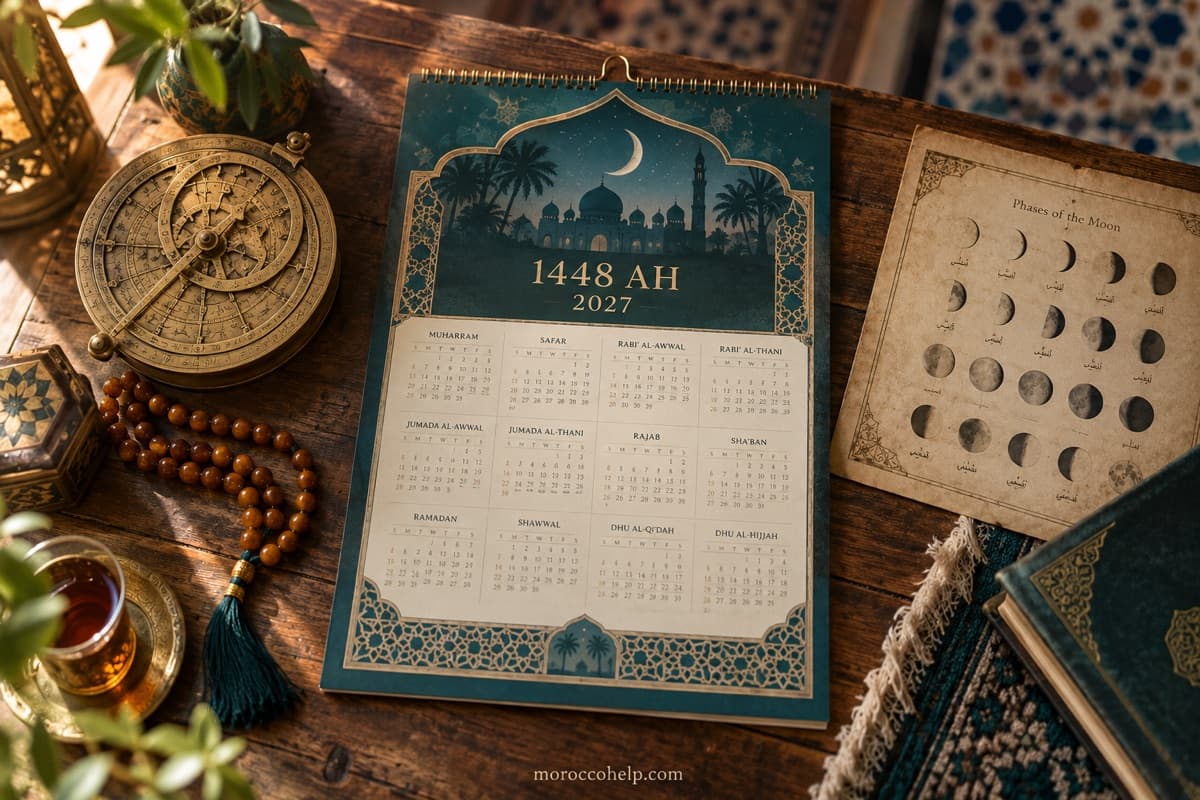
Every Islamic year carries one night that lifts the believer's gaze from earth to heaven: Laylat al-Isra wal-Mi'raj, the Night Journey and the Ascension. In 1448 AH, 27 Rajab falls — according to astronomical calculation — on Tuesday, January 5, 2027. That is still more than three months away, which is exactly why this guide comes now: so families, teachers and mosque circles in Morocco can prepare for it with knowledge rather than last-minute habit.
سُبْحَانَ الَّذِي أَسْرَىٰ بِعَبْدِهِ لَيْلًا مِّنَ الْمَسْجِدِ الْحَرَامِ إِلَى الْمَسْجِدِ الْأَقْصَى الَّذِي بَارَكْنَا حَوْلَهُ لِنُرِيَهُ مِنْ آيَاتِنَا ۚ إِنَّهُ هُوَ السَّمِيعُ الْبَصِيرُ
“Glory be to the One who took His servant by night from the Sacred Mosque to the Farthest Mosque, whose surroundings We have blessed, to show him of Our signs. Indeed, He is the Hearing, the Seeing.”
What Happened on That Night
The scholars of sirah place the event in the period of hardship before the Hijra — after the Year of Sorrow in which the Prophet ﷺ lost his wife Khadijah and his uncle Abu Talib. It was a night of divine consolation and honor, in two stages:
1. Al-Isra — the Night Journey
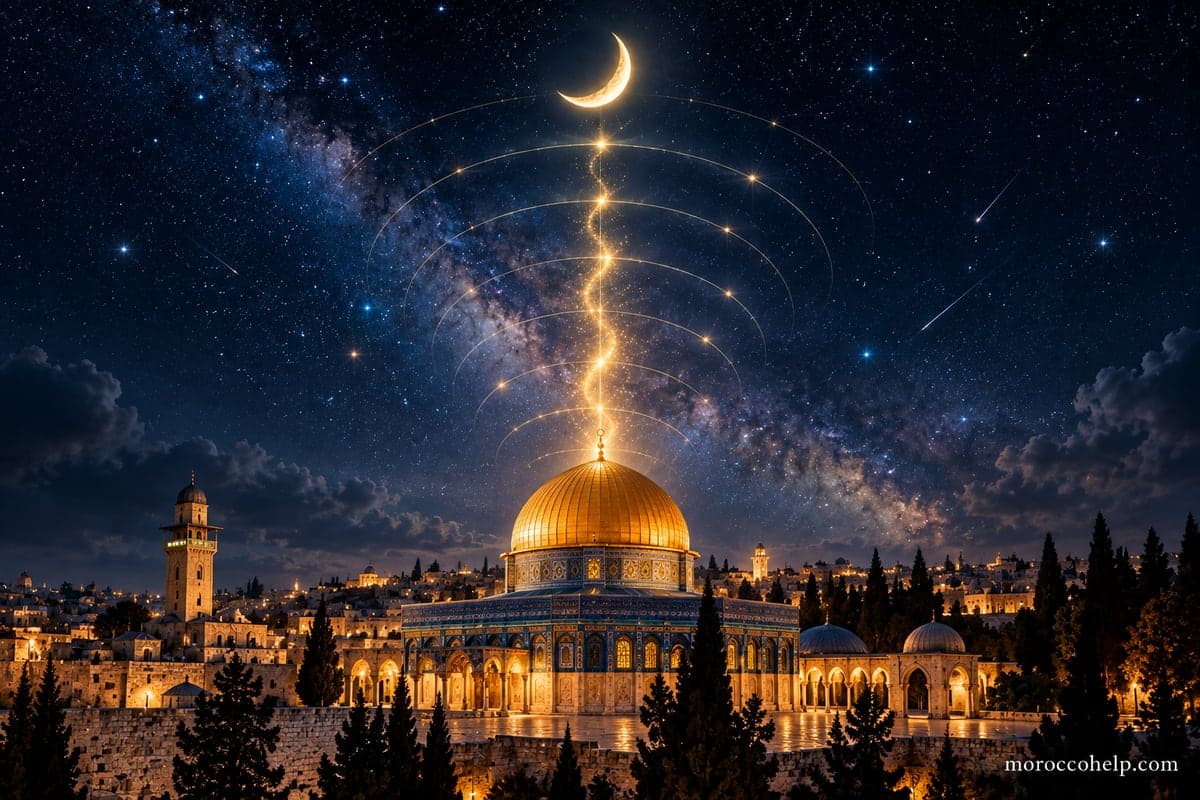
The Prophet Muhammad ﷺ was carried from the Sacred Mosque in Mecca to Al-Aqsa Mosque in Jerusalem on the Buraq, in a journey described in the hadiths of Bukhari and Muslim. At Al-Aqsa, he led all the prophets in prayer — a symbol of his leadership over the children of Adam — before ascending.
2. Al-Mi'raj — the Ascension
From Jerusalem, the Prophet ﷺ was raised through the seven heavens, meeting Adam, Isa (Jesus) and Yahya (John), Yusuf, Idris, Harun (Aaron) and Musa (Moses), and Ibrahim (Abraham) at the farthest lotus tree, the Sidrat al-Muntaha. There, the greatest gift of the night was given:
| Stage | Key moment |
|---|---|
| Mecca → Jerusalem | Buraq journey; prayer with the prophets at Al-Aqsa |
| Through the heavens | Meetings with the prophets at each level |
| Sidrat al-Muntaha | The farthest boundary; divine manifestations |
| The gift | Five daily prayers prescribed — fifty reduced to five, "and My reward does not change" |
The prescription of salah is the living legacy of that night: five prayers a day, each carrying the reward of fifty. No other act of worship was legislated above the heavens — which is why salah is the believer's own mi'raj, his daily ascension toward his Lord.
The Expected Date for 1448 AH in Morocco
| Hijri date | Expected Gregorian date |
|---|---|
| 1 Rajab 1448 | Around December 10, 2026 |
| 27 Rajab 1448 | Tuesday, January 5, 2027 |
Two Moroccan particularities matter here:
- Moon sighting. Morocco's Ministry of Habous and Islamic Affairs confirms the beginning of each lunar month through crescent sighting (ru'yat al-hilal) — as it did for Safar 1448 and Muharram 1448. The date above can therefore shift by one day; the official announcement usually comes a day or two before the month begins.
- Not a public holiday. Unlike Eid al-Fitr and al-Adha, Mawlid an-Nabi, Ashura and 1 Muharram, Isra and Mi'raj is not an official holiday in Morocco. Work and school continue; the observance is religious, centered on the night before.
How the Night Is Observed in Morocco
Moroccan mosques and families mark the eve of 27 Rajab in ways rooted in the country's Maliki tradition:
- Dourous (religious lessons) on the story and lessons of the Isra and Mi'raj, held in mosques after Isha;
- Quran recitation, especially Surah Al-Isra, and abundant salawat on the Prophet ﷺ — a Moroccan speciality all year round through Dala'il al-Khayrat;
- Family storytelling: parents retelling the journey to children, using its map — Mecca, Al-Aqsa, the heavens — as a geography of faith;
- Personal worship: night prayer, istighfar and reflection on one's own salah.
There is no specific prescribed ritual for the night; its purpose is remembering (dhikr), learning and reconnecting with the gift of prayer.
Fasting 27 Rajab: The Balanced Maliki View
A frequent question in Moroccan mosques: should I fast on 27 Rajab?
- No authentic hadith specifically prescribes fasting on 27 Rajab, nor a special prayer for that night. Scholars, including Maliki fuqaha, warn against presenting such acts as established Sunnah.
- Voluntary fasting in Rajab in general is permissible — Rajab is one of the four sacred months (al-ashhur al-hurum), and fasting sacred months carries general virtue.
- The safe path: fast voluntarily if you wish, with the intention of a general nafl fast, without attributing to the day itself a report-specific reward — and do not criticize those who fast or those who don't. For the rulings on voluntary fasting throughout the year, see our guide to Ramadan and fasting practices.
How to Prepare — A Family Checklist
With the date three months out, here is a realistic preparation plan:
- Mark the calendar now — Tuesday evening January 4 (27 Rajab eve) and Wednesday January 5, 2027, pending the Habous confirmation.
- Learn the story properly — read Surah Al-Isra and the hadith of the Mi'raj (Bukhari 3207; Muslim 162) beforehand; the Quran and tafsir hub is a good companion.
- Audit your salah — the best way to honor the night of the five prayers is to fix the five: timings, congregation, khushu'.
- Teach the children — one evening per week on the journey's story between now and Rajab beats a single rushed session.
- Plan the mosque evening — check your local mosque's program for the eve; attending the dars with family makes the night memorable.
- Connect it to Al-Aqsa — teach the family that every prayer in Morocco faces the same Kaaba the Prophet left from that night, and that Al-Aqsa is our third holy sanctuary.
Key Takeaways
- Isra & Mi'raj 1448: 27 Rajab, expected Tuesday, January 5, 2027 (Morocco confirms by moon sighting).
- The night has two stages: the journey to Al-Aqsa (Isra) and the ascent through the heavens (Mi'raj).
- Its enduring gift is the five daily prayers — pray them well, and the night is honored.
- In Morocco it is not a public holiday; it is observed with mosque lessons, recitation and family teaching.
- Fasting 27 Rajab specifically is not a confirmed Sunnah; general voluntary fasting in Rajab is permissible.