Maintaining Your Health During Ramadan
Ramadan is a month of spiritual devotion, but it is also a time when your body undergoes significant changes due to the altered eating and sleeping patterns. Fasting from dawn to sunset requires thoughtful planning to ensure you remain healthy, energized, and able to worship fully throughout the blessed month. With the right approach to nutrition, hydration, and daily habits, you can experience Ramadan as a time of physical renewal alongside spiritual growth.
In Morocco, where summer Ramadan days can mean fasting for over 16 hours, these health considerations become especially important. The traditional Moroccan diet offers many advantages during Ramadan, but understanding the science behind fasting helps you make even better choices.
Suhoor: The Most Important Meal
Why Suhoor Matters
The Prophet Muhammad (peace be upon him) said: "Take suhoor, for indeed in suhoor there is blessing" (Bukhari). Beyond the spiritual reward, suhoor is your body's fuel for the entire day ahead. Skipping it is one of the most common mistakes fasters make, leading to excessive fatigue, headaches, and difficulty concentrating.
What to Eat at Suhoor
Focus on foods that release energy slowly throughout the day:
- Complex carbohydrates: Whole wheat bread, oats, and barley provide sustained energy. Moroccan whole wheat khobz (bread) is an excellent choice.
- Protein: Eggs, cheese, yogurt, and legumes keep you feeling full longer and help maintain muscle mass during fasting.
- Healthy fats: Olive oil, avocado, and nuts slow digestion and provide lasting satiety.
- Fiber-rich foods: Fruits, vegetables, and whole grains regulate blood sugar levels and promote digestive health.
- Hydrating foods: Watermelon, cucumber, and tomatoes contribute to your fluid intake.
What to Avoid at Suhoor
- Excessively salty foods, which increase thirst during the day
- Sugary cereals and pastries that cause rapid blood sugar spikes followed by crashes
- Caffeine in large amounts, as it is a diuretic and can worsen dehydration
- Very heavy or greasy foods that cause discomfort and sluggishness
Iftar: Breaking the Fast Properly
The Sunnah Way to Break Your Fast
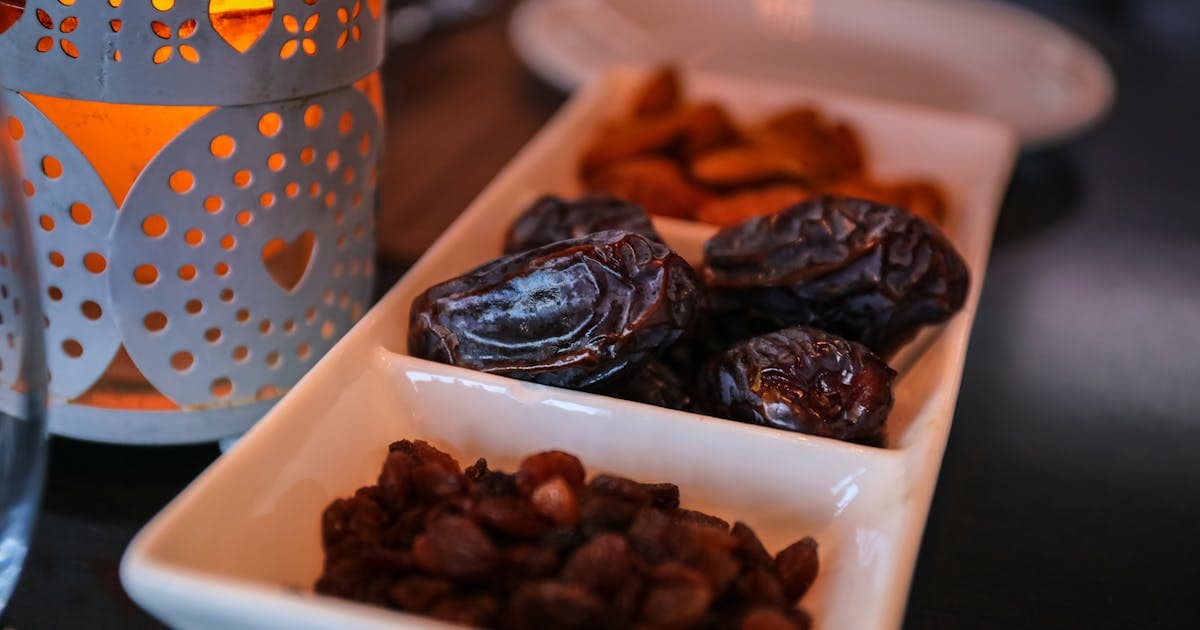
Following the Prophet's example, break your fast with dates and water. Dates provide natural sugars for quick energy, potassium for muscle function, and fiber for digestive health. This gentle start prepares your stomach for a full meal after hours of rest.
A Balanced Iftar Approach
In Morocco, the traditional iftar is a beautiful spread, but it is important to eat mindfully:
- Start with dates and water or milk: This stabilizes blood sugar gently.
- Have a warm soup: Moroccan harira is ideal, providing protein from lentils and chickpeas, carbohydrates, and warmth for the digestive system.
- Wait before the main meal: Pray Maghrib after the initial iftar, giving your stomach time to begin processing food.
- Eat a moderate main course: Include lean protein, vegetables, and a reasonable portion of carbohydrates.
Common Iftar Mistakes
- Overeating immediately after the adhan, which causes bloating, indigestion, and lethargy
- Consuming large amounts of fried foods like briouats and fried meats every night
- Drinking excessive amounts of sugary beverages like juices and sodas
- Eating continuously from iftar until suhoor without giving the body rest
Hydration Strategies
How Much Water Do You Need?
Aim for at least 8 to 10 glasses of water between iftar and suhoor. Dehydration is the leading cause of headaches, fatigue, and dizziness during Ramadan fasting, especially in Morocco's warmer climate.
Smart Hydration Tips
- Drink water steadily between iftar and suhoor rather than large amounts at once
- Keep a water bottle nearby during your evening activities as a reminder
- Eat water-rich fruits and vegetables like watermelon, oranges, cucumbers, and lettuce
- Avoid or minimize caffeinated drinks, which increase water loss
- Reduce salt intake at both iftar and suhoor to help your body retain fluids
Signs of Dehydration to Watch For
- Dark-colored urine
- Persistent headaches
- Dizziness or lightheadedness
- Extreme fatigue unrelated to normal fasting tiredness
- Dry mouth and lips
If you experience severe dehydration symptoms, Islamic law permits breaking the fast when health is at genuine risk. Consult a doctor and a knowledgeable scholar if you are unsure.
Exercise and Physical Activity
Should You Exercise During Ramadan?
Light to moderate exercise is generally safe and even beneficial during Ramadan. However, the timing and intensity should be adjusted.
Best Times to Exercise
- Before iftar: Light walking or stretching 30 to 60 minutes before breaking your fast allows you to rehydrate and eat shortly after.
- After iftar: Moderate exercise one to two hours after iftar, once your food has begun to digest, is the most practical option for many people.
- After Taraweeh: Some prefer light activity after the night prayers when the temperature is cooler.
Exercise Guidelines
- Reduce the intensity of your workouts compared to non-fasting periods
- Avoid strenuous exercise during the hottest parts of the day
- Focus on maintaining fitness rather than building muscle or losing weight
- Listen to your body and rest when needed
Managing Common Health Issues
Headaches
Headaches during the first few days of Ramadan are common, often caused by caffeine withdrawal, dehydration, or low blood sugar. Gradually reducing caffeine intake before Ramadan begins can prevent withdrawal headaches. Ensuring adequate hydration and a proper suhoor addresses the other causes.
Digestive Problems
Constipation can occur due to changes in eating patterns and reduced fluid intake. Combat this by including fiber-rich foods at both suhoor and iftar, staying hydrated, and avoiding excessive processed foods. Moroccan salads with raw vegetables, lentil soups, and whole grain breads are excellent choices.
Low Energy and Fatigue
Some fatigue is normal while fasting, but excessive tiredness may indicate nutritional deficiencies. Ensure your meals include iron-rich foods, B vitamins, and adequate protein. A short nap after Dhuhr prayer, following the sunnah of the Prophet (peace be upon him), can help restore energy for the afternoon.
Blood Sugar Management for Diabetics
Muslims with diabetes should consult their doctor before Ramadan. Depending on the type and severity of diabetes, fasting may require medication adjustments, more frequent blood sugar monitoring, or in some cases, exemption from fasting per Islamic guidelines. Never adjust medication without medical advice.
Special Considerations for Morocco
Dealing with Heat
Morocco's climate, particularly in summer months, can make fasting more challenging. Stay in cool environments when possible, minimize sun exposure during peak hours, and wear light, breathable clothing. If you work outdoors, take precautions to avoid heat exhaustion.
Traditional Moroccan Foods That Benefit Fasters
- Harira: A powerhouse soup with lentils, chickpeas, tomatoes, and herbs providing protein, carbs, vitamins, and hydration
- Dates and figs: Natural energy boosters rich in fiber and potassium
- Smen (preserved butter) with honey: A traditional suhoor combination providing healthy fats and quick energy
- Mint tea (in moderation): Aids digestion after iftar, though excessive amounts add caffeine and sugar
- Seasonal fruits: Morocco's abundance of oranges, melons, and grapes helps with hydration and nutrition
Conclusion
Ramadan fasting is a pillar of Islam that, when approached with knowledge and planning, can benefit both your spiritual and physical well-being. The key principles are simple: eat balanced suhoor and iftar meals, stay well hydrated between fasting hours, exercise moderately, and listen to your body. By combining the blessings of this sacred month with practical health awareness, you can fast with strength, worship with energy, and complete Ramadan feeling renewed in body and soul.