Safar 1448 (July 16, 2026): Morocco's Moon Sighting & the Truth About "Safar"
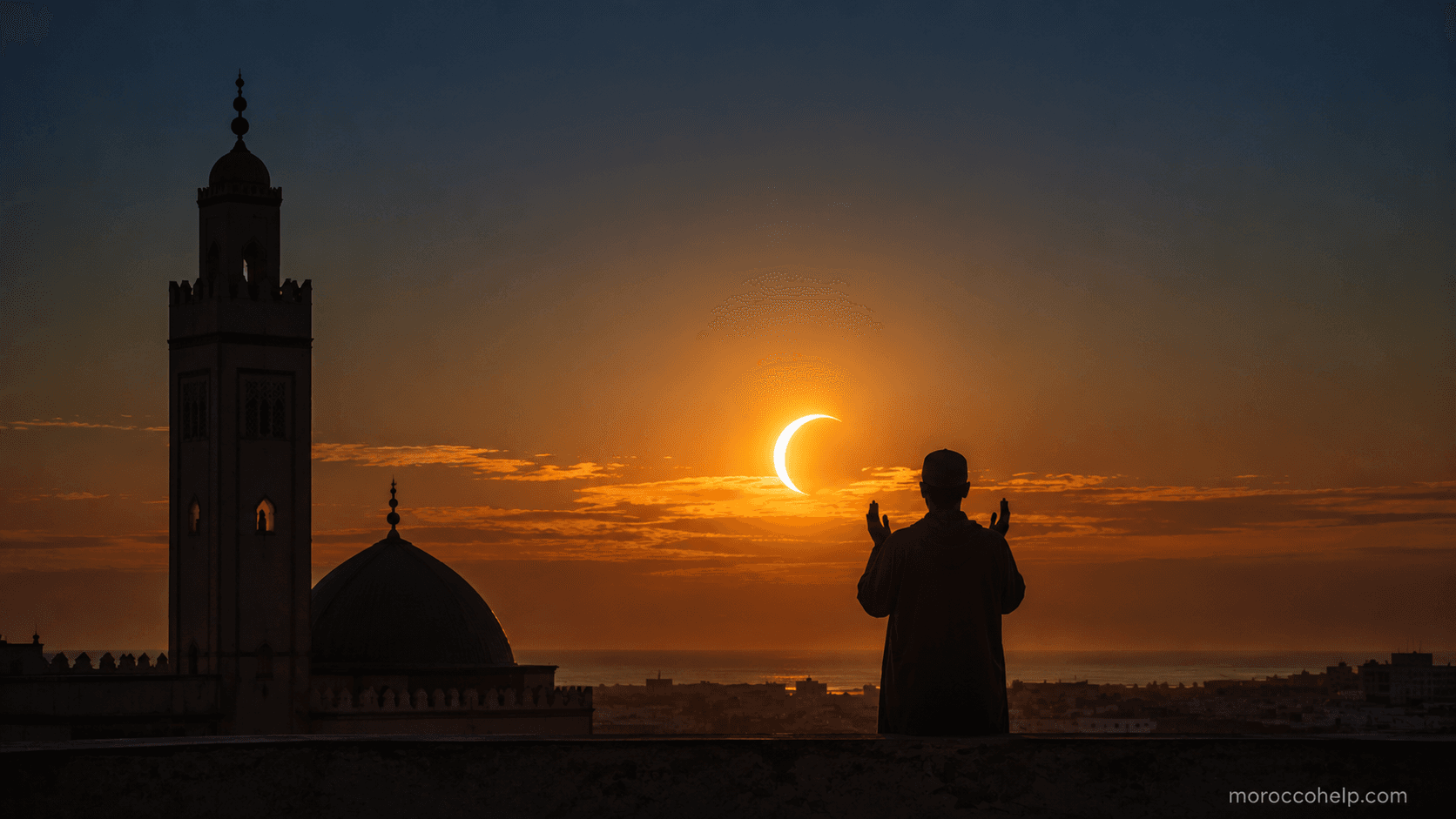
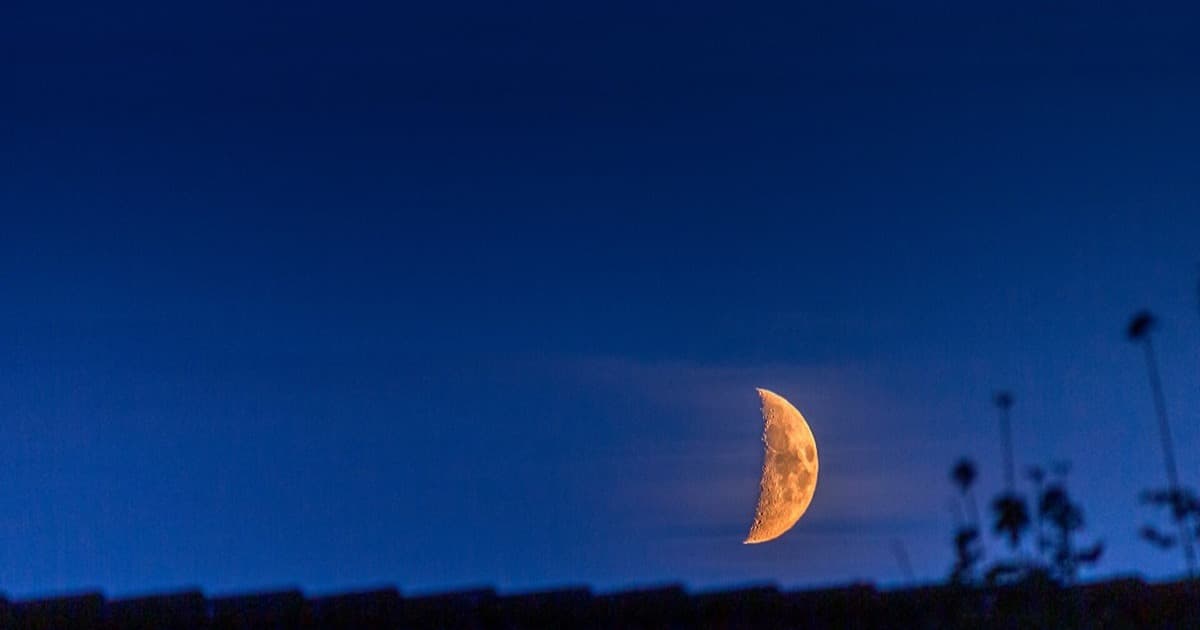
Morocco's Ministry of Habous and Islamic Affairs has confirmed that the month of Safar 1448 AH begins on Thursday, July 16, 2026. The waxing crescent (hilal) was sighted on the evening of Wednesday, July 15 (the 29th of Muharram), making this the first day of the second month of the Hijri year.
Official: Fatih Safar 1448, Thursday, July 16, 2026. The announcement follows the naked-eye observation Morocco has used for centuries. Verify each month on the Ministry of Habous moon-sighting page.
How Morocco Confirms the Start of Each Month
Morocco follows ru'yat al-hilal, the visual sighting of the new crescent by the naked eye. On the 29th of each lunar month, the Ministry's observers scan the western horizon just after sunset. Two outcomes are possible:
- The crescent is sighted → the next day is the 1st of the new month (the current month has 29 days).
- The crescent is not sighted → the current month is completed to 30 days (istikmāl), and the new month begins the day after.
This is why Islamic months are either 29 or 30 days, never more, never fewer.
Why Safar 1448 begins on July 16
The Hijri year 1448 began with 1 Muharram on Wednesday, June 17, 2026 (the Muharram crescent was not seen on June 15, so Dhul Hijja was completed to 30 days). Counting forward, the 29th of Muharram fell on Wednesday, July 15, 2026. That evening, the crescent of Safar was visible in the Moroccan sky, so Muharram counted 29 days and 1 Safar 1448 was declared for Thursday, July 16.
This matched astronomical forecasts: the new moon (conjunction) occurred on July 14, and the crescent was visible to the naked eye across North Africa and Western Europe on the evening of July 15.
Safar in the Islamic Calendar
Safar (صفر) is the second month of the Hijri lunar calendar, coming right after the sacred month of Muharram. Its name traditionally derives from the Arabic root for "yellow" or "empty", referring either to the yellowing of vegetation in the pre-Islamic Arabian summer, or to homes being left "empty" as tribes set out on journeys.
Key calendar context for 1448:
- 1 Muharram (Islamic New Year), June 17, 2026
- 10 Muharram (Ashura), June 26, 2026
- 1 Safar, July 16, 2026
- The month of Safar runs through approximately mid-August 2026.
The Myth of Safar as an "Unlucky" Month
In some cultures, including parts of North Africa, Safar carries an undeserved reputation as a month of misfortune. Old superstitions claim that calamities, illness, and bad luck cluster in Safar, leading people to postpone weddings, travel, or important decisions until the month passes.
This belief has no basis in Islam. The Prophet Muhammad ﷺ explicitly rejected it. In a well-known hadith recorded in both Sahih al-Bukhari (5757) and Sahih Muslim, he said:
"No 'adwā (contagion believed to transfer by itself), no ṭiyarah (evil omens), no Ṣafar, and no hāmah (the owl)." — (Bukhari & Muslim)
Here, "no Safar" specifically nullifies the pre-Islamic belief that the month of Safar brings evil. The Prophet ﷺ dismantled four superstitions in a single statement:
- 'Adwā, the idea that disease transfers on its own, without God's decree.
- Ṭiyarah, believing a bird, number, or day is a bad omen.
- Ṣafar, the myth that this month is unlucky.
- Hāmah, the belief that an owl's cry portends death.
What this means in practice
- Time brings no evil. Every moment is created by Allah; no month, day, or hour is inherently harmful. Believing otherwise is a form of shirk in attributing harm to something other than God.
- Act normally. There is no religious basis to delay marriage, business, travel, or any lawful act during Safar.
- Trust in Allah, not in superstition. The believer places their reliance (tawakkul) on Allah alone. As the Prophet ﷺ taught, if a believer sees something they dislike, the remedy is patience, prayer, and turning to God, not fearing an invented omen.
This is a position upheld by mainstream Sunni scholarship and consistently taught by Morocco's religious establishment, which works to correct such folk beliefs through mosque education and the scholarly councils.
The Wisdom of the Lunar Calendar
The sighting of the Safar crescent is a quiet but meaningful rhythm of Muslim life. The lunar calendar, confirmed month by month, crescent by crescent, binds the global Muslim community to the same sky the Prophet ﷺ and his companions watched. Each announced month is a small reminder that time is a trust (amānah), and that our calendar is tied not to the sun alone, but to the signs Allah placed in the heavens.
“It is He who made the sun a [source of] radiant light and the moon a derived light, and determined for it phases, that you may know the number of years and account [of time].”
How to Stay Informed
Moroccans and the diaspora can confirm the start of each Hijri month through:
- The Ministry of Habous website (habous.gov.ma), which publishes each sighting result.
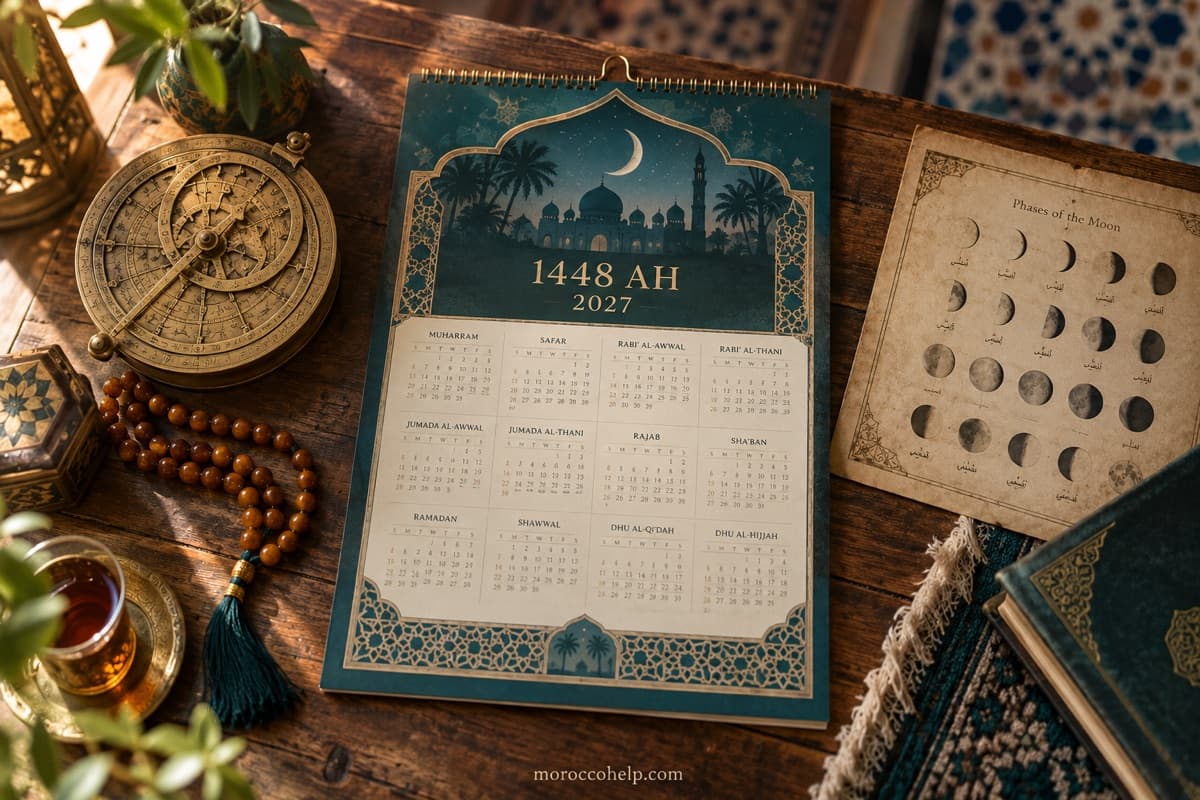
- Our Hijri Calendar tool, which lets you convert between Hijri and Gregorian dates and track the Islamic months.
- The daily prayer times, which follow the same lunar rhythm.
May this new month of Safar bring you and your family peace, blessings, and increased good, and may Allah protect us from the whispers of superstition.