Rabat World Book Capital 2026: The Saudi Pavilion That Shared 10,000 Quran Copies at SIEL
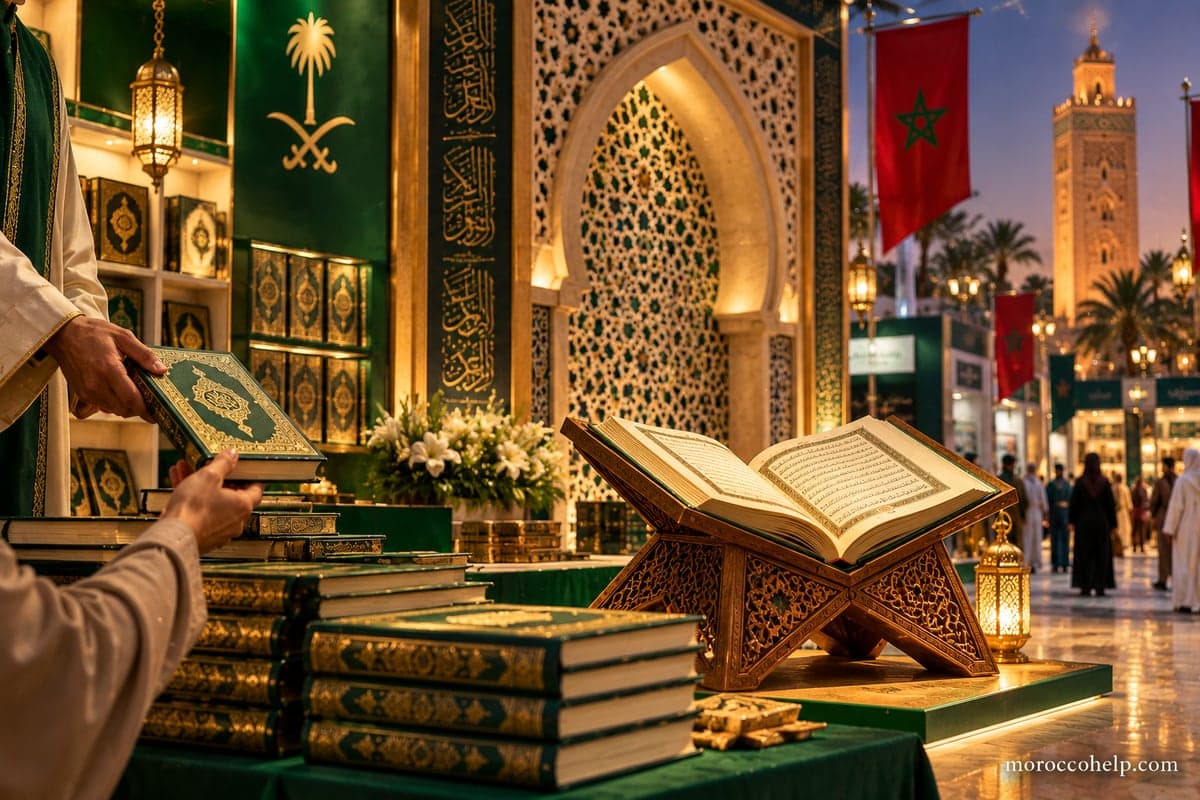
2026 is a landmark year for the Moroccan capital: Rabat holds the title of UNESCO World Book Capital 2026, a year-long program launched with UNESCO on April 24, 2026. Among the highlights of this celebration, the 31st Salon International de l'Édition et du Livre (SIEL) — held from May 1 to 10, 2026 — drew publishers and readers from across the world to the capital. And within it, one pavilion spoke directly to Moroccan hearts: the Saudi pavilion, which shared the Quran on a massive scale.
The Saudi Pavilion at SIEL 2026: Who Was There
Saudi Arabia's participation, launched by the Literature, Publishing and Translation Commission, brought together several state institutions under one roof:
| Participant | Role |
|---|---|
| Ministry of Islamic Affairs, Dawah and Guidance | Religious outreach, dawah literature, Quran gifting |
| King Fahd Complex for the Printing of the Holy Quran | Mushaf editions, translations, braille and large-print Qurans |
| King Fahd National Library | Archival and documentary exhibits |
| Saudi cultural bodies | Publishing, translation and heritage programming |
According to Arab News coverage, around 10,000 copies of the Holy Quran were distributed to visitors during the fair — from pocket mushafs to deluxe editions, including foreign-language translations of the meanings of the Quran.
The King Fahd Complex: The World's Quran Printer
The institution behind most of these copies deserves an introduction. The King Fahd Complex for the Printing of the Holy Quran, founded in 1985 in Medina, is one of the largest Quran printing facilities on earth. Its output — hundreds of millions of copies since its creation — reaches mosques, schools and libraries across the Muslim world, in Arabic recitations as well as translations of the meanings into dozens of languages.
Morocco was not an isolated gesture. At the Cairo International Book Fair 2026, the same ministry's pavilion gifted roughly 50,000 copies to Egyptian visitors, and the Complex reported distributing hundreds of thousands of copies through similar events worldwide. The Rabat edition continues a well-established tradition of Quran diplomacy.
A Bridge Between Two Quranic Traditions
For Moroccan visitors, receiving a Saudi-printed mushaf is also an encounter with a different qira'ah (canonical recitation):
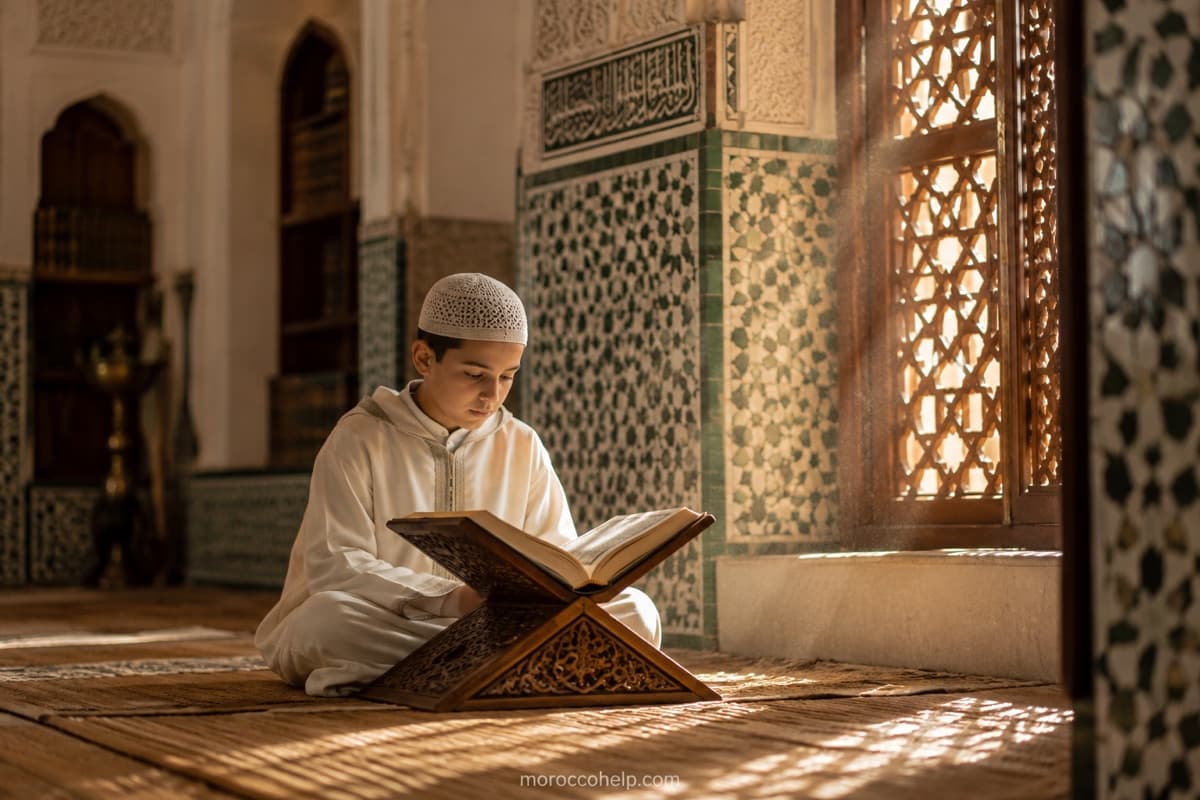
- In Morocco, mosques and madrasas follow the Warsh 'an Nafi' narration — a transmission from Medina via Qalun that arrived in the Maghreb over a millennium ago and remains the kingdom's official rasm and recitation in the Moroccan mushaf.
- The Saudi-distributed mushaf follows Hafs 'an 'Asim, the narration predominant in Egypt, the Gulf, South Asia and most of the Islamic world.
Both are authentic, mass-transmitted recitations of the same Quran — a living illustration of the verse that the Quran was revealed "in seven ahruf (modes)". The SIEL pavilion thus became, quietly, a lesson in the unity and diversity of Islamic scripture.
Why It Matters for Morocco
Beyond the gift itself, the pavilion reinforced a broader pattern of Morocco–Saudi religious cooperation — from imam training programs to joint Quranic events, alongside Morocco's own flagship institutions: the katatib (Quranic schools) network supervised by the Ministry of Habous and Islamic Affairs, and the King Mohammed VI International Quran Award, whose 20th edition gathered 83 reciters from 45 countries this summer.
For Moroccan families, the fair offered three practical wins:
- Free access to quality mushafs — including editions (large print, translations) that can be expensive in bookshops.
- Awareness of the diversity of Quranic recitation — an often-overlooked part of Islamic scholarship.
- A family outing with purpose — combining the World Book Capital atmosphere with religious enrichment.
Looking Ahead in the World Book Capital Year
Rabat's title runs until April 2027, with programming continuing through the year — readings, exhibitions, and literary events across the capital. If you missed SIEL, keep an eye on the official World Book Capital program: further book-related events are scheduled through the autumn, and Moroccan publishers regularly offer Quranic and Islamic titles at reduced prices during these salons.
Practical tip. When receiving or buying a mushaf, check the riwayah indicated on the interior cover (حفص عن عاصم for Hafs, ورش عن نافع for Warsh). Morocco's mosques pray and teach in Warsh; learners following online tajweed courses should make sure their teacher's narration matches the mushaf in their hands.
Key Takeaways
- Rabat is UNESCO World Book Capital 2026 (April 2026 – April 2027); SIEL's 31st edition ran May 1–10, 2026.
- The Saudi pavilion — Ministry of Islamic Affairs and the King Fahd Complex — distributed ~10,000 Quran copies.
- Saudi mushafs follow Hafs 'an 'Asim; Morocco's tradition is Warsh 'an Nafi' — both authentic recitations of the same Quran.
- The event is part of a wider Morocco–Saudi religious relationship, alongside Morocco's own Habous and Quran Award institutions.