Introduction to the Islamic Hijri Calendar
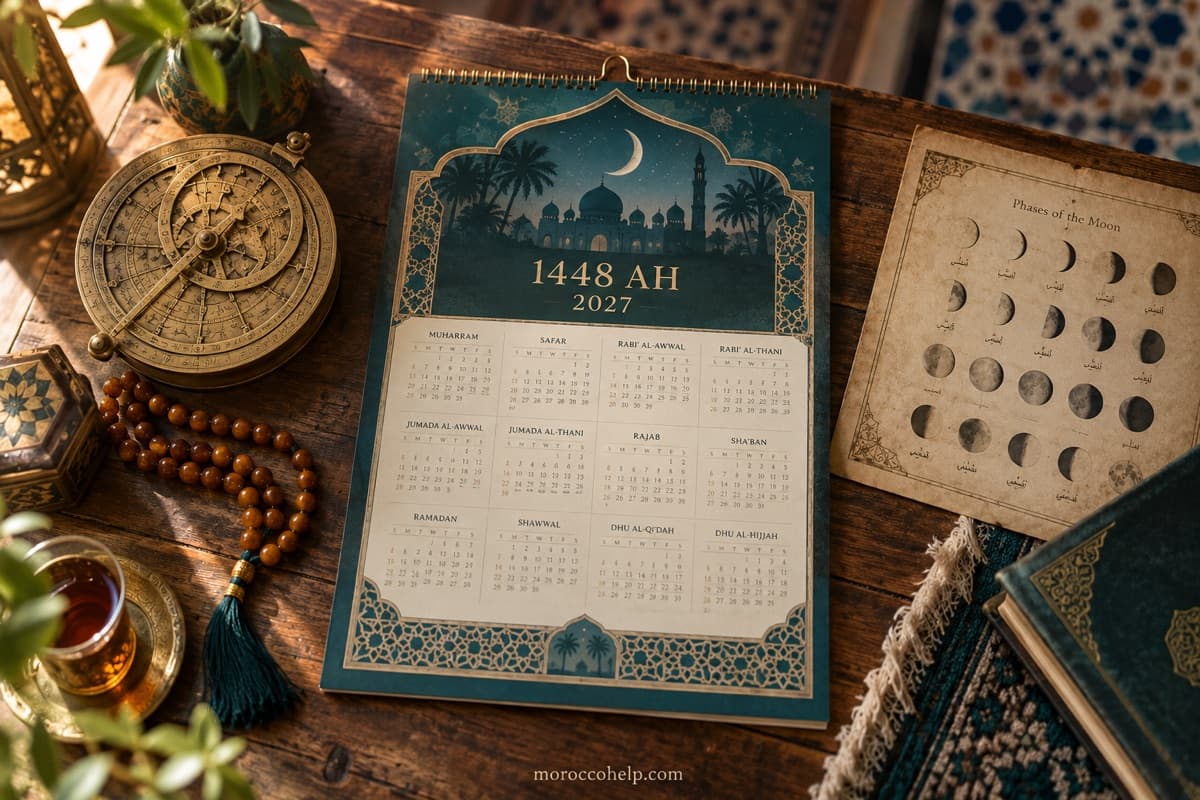
The Islamic calendar, also known as the Hijri calendar, is a lunar calendar consisting of 12 months that follows the cycles of the moon. It was established during the caliphate of Umar ibn al-Khattab (may Allah be pleased with him), with the starting point (Year 1) set at the Hijra, the migration of Prophet Muhammad (peace be upon him) from Makkah to Madinah in 622 CE.
Unlike the Gregorian solar calendar, which has fixed months of 30 or 31 days, the Islamic calendar's months alternate between 29 and 30 days depending on the moon sighting. This means the Islamic year is approximately 10 to 12 days shorter than the solar year, causing Islamic dates to shift through the seasons over a cycle of about 33 years.
In Morocco, the Hijri calendar holds both religious and official significance. Islamic holidays, Ramadan, and other religious observances are determined by the Hijri calendar, and the Moroccan government officially announces moon sightings for key dates.
The Twelve Months of the Islamic Calendar
1. Muharram (The Sacred Month)
Muharram is the first month of the Islamic year and one of the four sacred months in which fighting was traditionally prohibited. The name comes from the Arabic word "haram," meaning forbidden, referring to this prohibition. The 10th of Muharram, known as Ashura, is a significant day on which the Prophet (peace be upon him) recommended fasting, as it commemorates the day Allah saved Musa (Moses) and the Children of Israel from Pharaoh.
In Morocco, Ashura is celebrated with particular cultural traditions. Families prepare special foods, children receive gifts, and communities come together. The Moroccan celebration of Ashura blends religious observance with local customs that have been passed down for generations.
2. Safar (The Empty Month)
Safar is the second month of the Hijri calendar. The name may derive from the Arabic word for "empty" or "yellow," with some historians suggesting it was named because Arab homes were empty during this month as men went out for travel or warfare. In pre-Islamic times, many superstitions were associated with Safar, but the Prophet (peace be upon him) explicitly rejected these, saying there is no bad omen in Safar.
3. Rabi al-Awwal (The First Spring)
Rabi al-Awwal is the third month and is most notable as the month in which Prophet Muhammad (peace be upon him) was born. The 12th of Rabi al-Awwal is widely celebrated as Mawlid al-Nabi (the Prophet's Birthday) across the Muslim world — see our complete Mawlid an-Nabi 2026 Morocco guide for the confirmed date, Moroccan traditions, and the Maliki view. In Morocco, Mawlid is a national holiday marked by special gatherings, recitations of poetry praising the Prophet, and communal meals. Moroccan families prepare traditional sweets and attend religious lectures at mosques and zaouias throughout the country.
4. Rabi al-Thani (The Second Spring)
Also known as Rabi al-Akhir, this is the fourth month of the Islamic calendar. While it does not carry major religious events, it is a month in which Muslims continue their regular worship and spiritual practices. The name continues the spring reference from the previous month, as these months originally fell during the Arabian spring season when the calendar was first named.
5. Jumada al-Ula (The First of the Dry)
Jumada al-Ula is the fifth month. The name derives from "jamad," meaning dry or frozen, as it originally coincided with a period of cold or dry weather. Though no major Islamic events are specifically tied to this month, it is a time for continued devotion and the ongoing rhythm of daily worship.
6. Jumada al-Thani (The Second of the Dry)
The sixth month, also called Jumada al-Akhira, completes the pair of "dry" months. Like its predecessor, it is a month without major religious occasions but offers Muslims the steady opportunity of daily prayer, Quran study, and charitable works that define the Muslim year.
7. Rajab (The Respected Month)
Rajab is the seventh month and the second of the four sacred months. Its name comes from "rajaba," meaning to respect or revere. This month holds special significance as the month of the Isra and Mi'raj, the Prophet's miraculous night journey from Makkah to Jerusalem and his ascension through the heavens. In Morocco, the 27th of Rajab is observed with special prayers and religious lectures commemorating this extraordinary event.
Some Muslims increase their voluntary fasting and worship during Rajab as a preparation for the blessed months of Sha'ban and Ramadan that follow.
8. Sha'ban (The Month of Separation)
Sha'ban is the eighth month and serves as a bridge between Rajab and Ramadan. The Prophet (peace be upon him) used to fast extensively during Sha'ban, more than in any other month outside of Ramadan. When asked about this, he explained that it is a month in which deeds are raised to Allah, and he wished his deeds to be raised while he was fasting.
The 15th of Sha'ban (Laylat al-Bara'ah or the Night of Forgiveness) is observed by many Muslims with extra worship, though scholars differ on the specific practices associated with it. In Morocco, this night is acknowledged with prayers and supplications in many communities.
9. Ramadan (The Month of Fasting)
Ramadan is the ninth month and undoubtedly the most well-known month of the Islamic calendar. It is the month in which the Quran was first revealed, and fasting from dawn to sunset is obligatory for every able adult Muslim. Beyond fasting, Ramadan is a month of intensified prayer, Quran recitation, charity, and community.
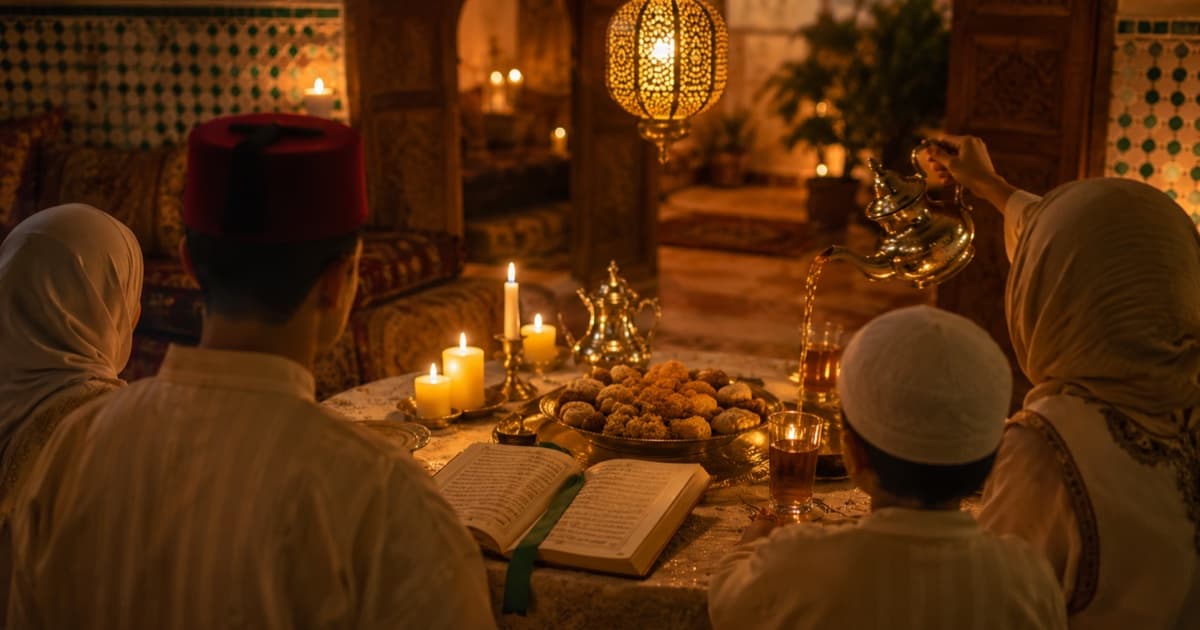
In Morocco, Ramadan transforms the entire nation. The daily schedule shifts, special foods are prepared, mosques overflow with worshipers for Taraweeh prayers, and the spirit of generosity and brotherhood reaches its peak. The last ten nights, during which Laylat al-Qadr (the Night of Power) is sought, are the spiritual climax of the month.
10. Shawwal (The Month of Upliftment)
Shawwal is the tenth month and begins with Eid al-Fitr, one of the two major Islamic holidays. Eid al-Fitr, celebrated on the 1st of Shawwal, marks the end of Ramadan and is a day of joy, gratitude, and community. Muslims perform the special Eid prayer, give Zakat al-Fitr (charitable donation of food), wear their best clothes, and visit family and friends.
The Prophet (peace be upon him) also encouraged fasting six days during Shawwal after Eid, saying: "Whoever fasts Ramadan and follows it with six days of Shawwal, it is as if they fasted the entire year" (Muslim). In Morocco, Eid al-Fitr is a multi-day celebration with feasts, family gatherings, and new clothes for children.
11. Dhul Qi'dah (The Month of Rest)
Dhul Qi'dah is the eleventh month and the third of the four sacred months. Its name means "the one of sitting," as the pre-Islamic Arabs would refrain from warfare and sit during this month. It is also the month in which Muslims preparing for Hajj begin their final preparations and travel to Makkah. For the rest of the Ummah, it is a time of anticipation as the Hajj season approaches.
12. Dhul Hijjah (The Month of Hajj)
Dhul Hijjah is the twelfth and final month of the Islamic year. It contains the Hajj pilgrimage (8th-13th), the Day of Arafat (9th), and Eid al-Adha (10th). The first ten days of Dhul Hijjah are considered among the most blessed days of the entire year. The Prophet (peace be upon him) said: "There are no days in which righteous deeds are more beloved to Allah than these ten days" (Bukhari).
Eid al-Adha, the Festival of Sacrifice, commemorates Prophet Ibrahim's willingness to sacrifice his son in obedience to Allah. Muslims who can afford it sacrifice an animal and distribute the meat among family, friends, and the poor. In Morocco, Eid al-Adha (known locally as Eid al-Kabir) is the largest celebration of the year, with families coming together from across the country for the sacrifice and multi-day festivities.
The Sacred Months
Four months in the Islamic calendar are designated as sacred (al-ashhur al-hurum): Muharram, Rajab, Dhul Qi'dah, and Dhul Hijjah. During these months, the gravity of sins is considered greater, and the reward of good deeds is considered more significant. The Quran states:
إِنَّ عِدَّةَ الشُّهُورِ عِندَ اللَّهِ اثْنَا عَشَرَ شَهْرًا فِي كِتَابِ اللَّهِ يَوْمَ خَلَقَ السَّمَاوَاتِ وَالْأَرْضَ مِنْهَا أَرْبَعَةٌ حُرُمٌ
“Indeed, the number of months with Allah is twelve months in the register of Allah from the day He created the heavens and the earth; of these, four are sacred.”
How Morocco Determines the Islamic Calendar
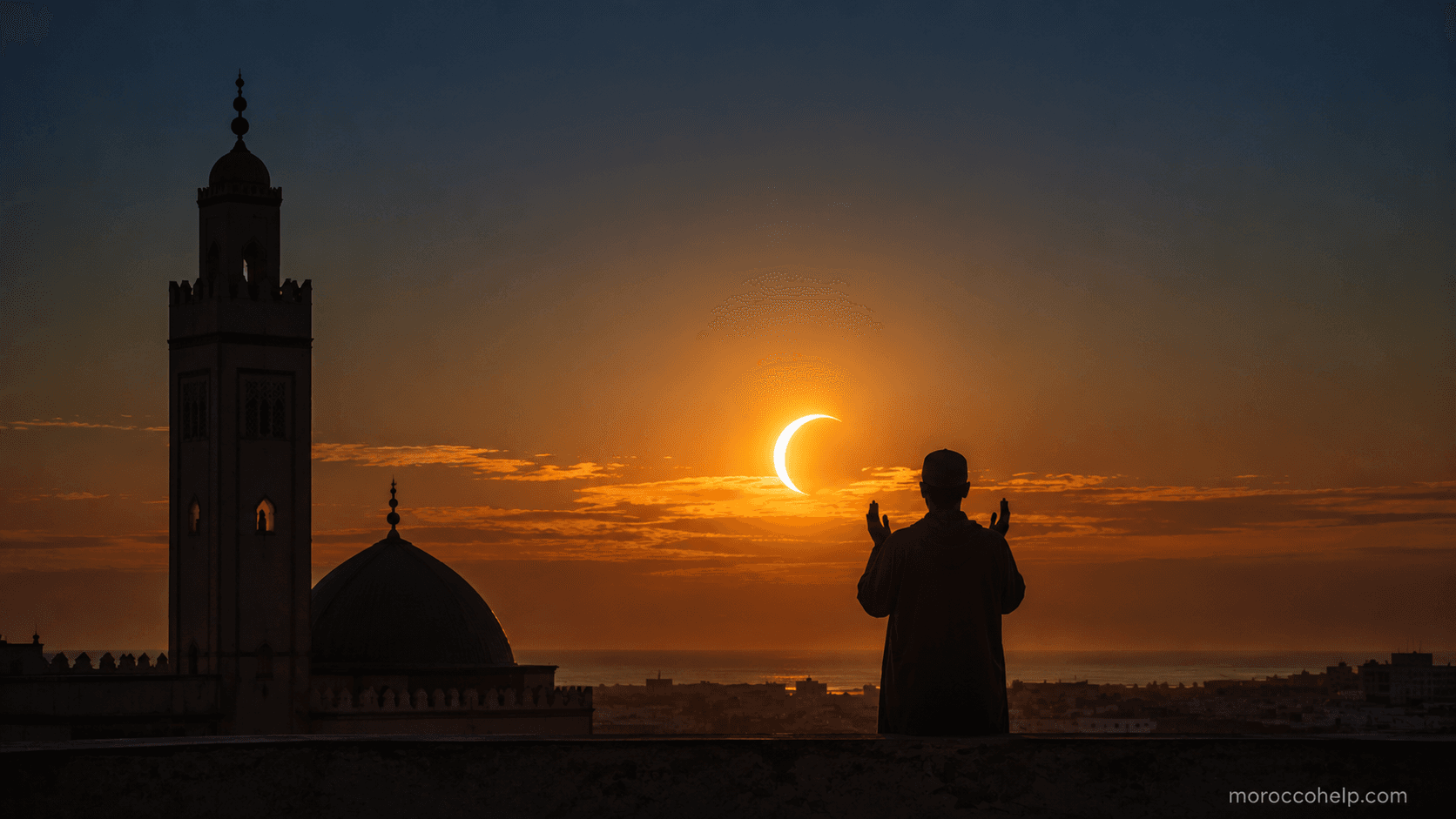
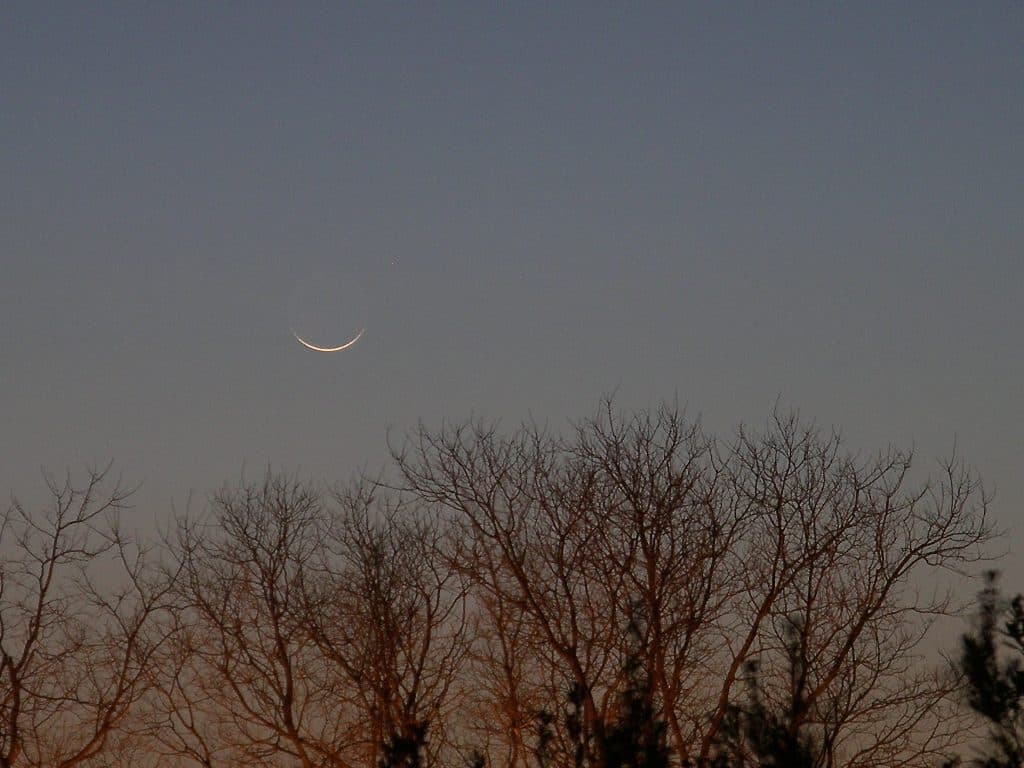
Morocco follows the practice of moon sighting (ru'yat al-hilal) to determine the start and end of Islamic months, particularly for Ramadan, Eid al-Fitr, and Eid al-Adha. The Ministry of Habous and Islamic Affairs convenes a committee of scholars and observers who look for the new crescent moon. The King's official announcement of the new month is a moment of national significance, broadcast on television and radio.
Conclusion
The Islamic Hijri calendar is far more than a system for marking dates. It is a spiritual roadmap that guides Muslims through a year rich with opportunities for worship, reflection, celebration, and community. Each month carries its own character, from the sacred solemnity of Muharram to the joyous celebrations of Shawwal and Dhul Hijjah. For Muslims in Morocco and worldwide, understanding the Islamic months deepens the connection to the rhythms of faith that have guided the Ummah for over 14 centuries.
See it in action: Explore the interactive Hijri calendar to view today's Hijri date, convert any Gregorian date, and track upcoming Islamic events.