7 Traditional Moroccan Eid Al-Adha Recipes: Lamb Dishes for the Feast
Eid al-Adha in Morocco, known as Eid al-Kebir, is as much a culinary event as a spiritual one. From the first sizzle of liver on the charcoal grill to the slow-simmered tagines of the following days, every dish carries generations of tradition.
Our Eid al-Adha guide covers the spiritual significance and traditions. Our qurbani checklist explains meat processing and storage. This article is dedicated entirely to the recipes, the heart of the Moroccan Eid table.
1. Boulfaf, Grilled Liver Skewers (بولفاف)
The first dish eaten after the sacrifice. Boulfaf is liver wrapped in caul fat (crépine) and grilled over charcoal, simple, smoky, and deeply satisfying.
Ingredients:
- Lamb liver, cut into 3cm cubes
- Caul fat (la crépine / الشحمة), soaked in warm water
- Ground cumin
- Salt
- Paprika (optional)
Steps:
- Rinse the liver and cut into even cubes (about 3cm)
- Soak the caul fat in warm salted water until pliable (10-15 minutes)
- Season the liver cubes generously with cumin, salt, and paprika
- Wrap each cube in a piece of caul fat, not too tight, just enough to hold
- Thread onto metal or wooden skewers (3-4 pieces per skewer)
- Grill over hot charcoal, turning regularly, for 8-12 minutes until cooked through but still tender
- Serve immediately with fresh bread, extra cumin-salt dip, and mint tea
Moroccan tip: The caul fat bastes the liver as it melts, keeping it moist. This is traditionally eaten standing around the grill, shared among family and neighbors who helped with the sacrifice.
2. Mrouzia, Sweet Lamb Tagine (مروزية)
The jewel of Fassi (Fez) cuisine. Mrouzia is a sweet-savory masterpiece of slow-cooked lamb with honey, raisins, and almonds, a dish that defines Eid al-Kebir for many Moroccan families.
Ingredients:
- 1.5 kg lamb shoulder or leg, cut into large pieces
- 200g raisins (soaked)
- 150g blanched almonds (fried until golden)
- 3 tablespoons ras el hanout
- 2 tablespoons ground cinnamon
- 1 tablespoon ground ginger
- 4 tablespoons honey
- 2 tablespoons smen (aged butter) or regular butter
- 1 onion, grated
- Saffron threads (a generous pinch)
- Salt and pepper
- Water
Steps:
- Season the lamb with ras el hanout, cinnamon, ginger, saffron, salt, and pepper. Let it marinate for at least 2 hours (overnight is ideal)
- In a large tagine or heavy pot, melt the smen and brown the lamb on all sides
- Add the grated onion and enough water to barely cover the meat
- Bring to a boil, then reduce heat and simmer covered for 2-2.5 hours until very tender
- Add the soaked raisins and honey. Continue cooking uncovered for 30 minutes, stirring occasionally, until the sauce becomes thick and glossy
- Garnish with fried almonds
- Serve with fresh bread for scooping the rich sauce
Moroccan tip: The key to mrouzia is patience, the sauce should reduce to a dark, caramelized glaze. Some families prepare it on the second day of Eid when the meat has been properly aged.
3. Mechoui, Slow-Roasted Whole Lamb (مشوي)
The ultimate celebratory dish. Mechoui is a whole lamb (or large leg) roasted slowly until the meat falls off the bone.
Ingredients:
- Whole lamb or large leg of lamb
- 200g butter, softened
- 3 tablespoons ground cumin
- 2 tablespoons salt
- 1 tablespoon paprika
- Garlic cloves (optional)
Steps:
- Mix the butter with cumin, salt, paprika, and crushed garlic to make a paste
- Rub the lamb thoroughly, inside and out, pushing paste into all cuts and crevices
- Oven method: Place in a large roasting pan, cover tightly with foil. Roast at 150°C for 5-6 hours (for a whole lamb) or 3-4 hours (for a leg)
- Traditional pit method: Build a fire in a dug pit, let it burn down to embers. Suspend the lamb above and cover the pit. Rotate every 30 minutes for 4-6 hours
- The meat is done when it pulls away from the bone with no resistance
- Serve on a large communal platter with bowls of cumin-salt for dipping
Moroccan tip: Mechoui is traditionally eaten with the hands, pull tender pieces directly from the carcass and dip in the cumin-salt mixture. It is often the centerpiece of large family gatherings.
4. Tangia Marrakchia, Slow-Cooked Clay Pot Lamb (طنجية)
Originally a bachelor's dish from Marrakech, tangia has become an Eid favorite. The lamb is sealed in a clay pot and slow-cooked in the embers of a hammam furnace, or a modern oven.
Ingredients:
- 1 kg lamb shank or shoulder, cut into large chunks
- 2 tablespoons smen (aged butter)
- 1 preserved lemon, quartered
- A generous pinch of saffron
- 1 teaspoon ground cumin
- 1 teaspoon turmeric
- 4 garlic cloves, whole
- Water (about 250ml)
- Salt and pepper
Steps:
- Place all ingredients in a clay tangia pot (or use a sealed casserole dish)
- Add water to come about a third of the way up the meat
- Seal the top with parchment paper and tie tightly with string
- Traditional method: Take to the hammam furnace keeper (fernatchi) who buries it in hot ashes for 6-8 hours
- Oven method: Cook at 140°C for 5-6 hours, sealed tightly
- The meat should be falling-apart tender in a rich, golden sauce
- Serve directly from the pot with bread
Moroccan tip: The magic is in the sealed, slow cooking, the steam has nowhere to escape, creating incredibly tender, concentrated flavors. In Marrakech, men traditionally prepare tangia for their Eid gatherings.
5. Couscous Tfaya with Lamb, The Day 2 Classic (كسكس تفاية)
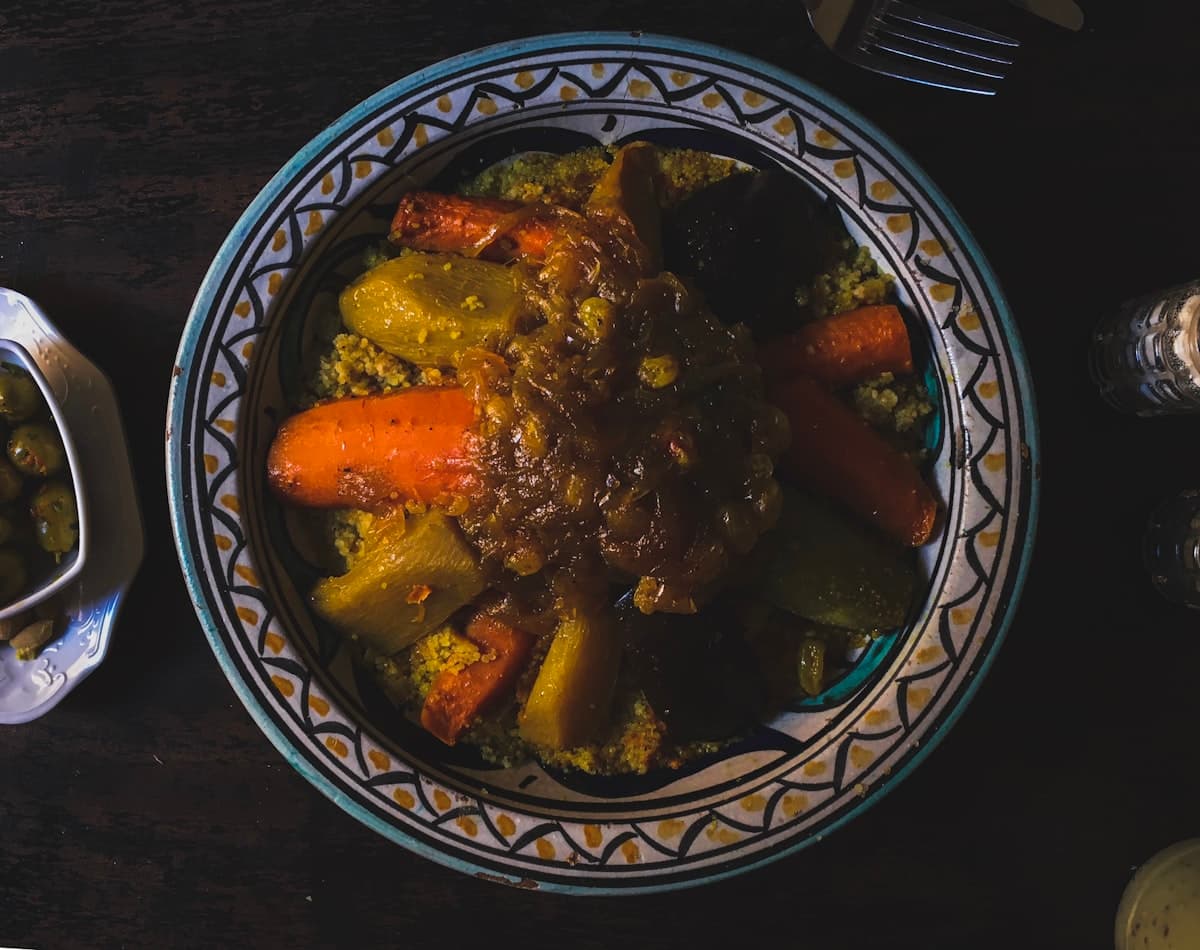
If boulfaf is Day 1, couscous tfaya is the undisputed queen of Day 2. The caramelized onion-raisin topping transforms simple couscous into something extraordinary.
Ingredients:
- 500g couscous (medium grain)
- 1 kg lamb shoulder or neck, in pieces
- 500g onions, thinly sliced
- 150g raisins
- 3 tablespoons honey
- 2 tablespoons ground cinnamon
- 1 tablespoon smen or butter
- Saffron threads
- Salt and pepper
- Chickpeas (optional, soaked overnight)
Steps:
- Season the lamb with salt, pepper, saffron, and a little cinnamon. Place in the bottom of a couscoussier with water and chickpeas
- Steam the couscous in the top part of the couscoussier in three rounds, fluffing with butter and water between each round
- For the tfaya topping: In a separate pan, cook the sliced onions slowly in butter and oil over low heat for 30-40 minutes until deeply caramelized and dark golden
- Add the raisins, honey, and remaining cinnamon to the onions. Cook 10 more minutes until thick and jam-like
- Mound the couscous on a large platter, make a well in the center
- Place the lamb in the well, pour over some broth
- Top generously with the tfaya (caramelized onions and raisins)
Moroccan tip: The tfaya should be almost black with caramelization, this is not a mistake, it's perfection. The contrast between the sweet topping and the savory lamb is what makes this dish legendary.
6. Khlii, Moroccan Preserved Meat (خليع)
Khlii is Morocco's answer to confit, meat preserved in rendered fat and spices that keeps for months without refrigeration. It is the traditional way to make the most of the qurbani meat.
Ingredients:
- 2 kg lean beef or lamb, cut into long strips
- 500g animal fat (from the sacrifice)
- 250ml olive oil
- 4 tablespoons coarse salt
- 2 tablespoons ground coriander
- 2 tablespoons ground cumin
- 1 tablespoon garlic powder
- 1 tablespoon paprika
- 1 teaspoon ground black pepper
- Vinegar (for initial curing)
Steps:
- Cut the meat into long strips (about 2cm thick, 15-20cm long)
- Rub generously with salt and spices. Place in a large container
- Sprinkle with vinegar, mix well. Cover and refrigerate for 24 hours
- Sun-drying: Thread the strips onto strings or hooks and hang in direct sunlight for 2-3 days until dry but still pliable. Bring indoors at night
- Cooking: In a large pot, render the animal fat. Add olive oil
- Add the dried meat strips. Cook over low-medium heat for 2-3 hours, stirring occasionally, until the meat is deeply browned and cooked through
- Transfer meat and fat into clean, sterilized glass jars. The fat should fully cover the meat
- Seal tightly. Store in a cool, dark place, khlii keeps for months
Moroccan tip: Khlii is used year-round in Moroccan cooking, crumbled into scrambled eggs for breakfast, added to lentil soups, or mixed into tagines. Making khlii during Eid is an investment in months of delicious meals.
7. Bouzellouf, Lamb Head Soup (بوزلوف)
Nothing goes to waste in Moroccan cuisine. Bouzellouf transforms the lamb's head and trotters into a rich, nourishing soup, a beloved tradition that honors the principle of using every part of the sacrifice.
Ingredients:
- 1 lamb head, cleaned and halved (ask your butcher)
- 4 lamb trotters, cleaned
- 2 onions, quartered
- 4 garlic cloves
- 2 tablespoons ground cumin
- 1 tablespoon ground coriander
- 1 teaspoon turmeric
- Fresh coriander and parsley
- Salt and pepper
- Water (to cover generously)
Steps:
- Cleaning: Thoroughly singe any remaining hair with a blowtorch or open flame. Scrub with coarse salt and rinse multiple times until clean
- Place the head and trotters in a large pot. Cover with cold water
- Bring to a boil and skim the foam thoroughly
- Add onions, garlic, cumin, coriander, turmeric, salt, and pepper
- Reduce heat and simmer for 3-4 hours until the meat is falling off the bone
- Remove the head and trotters. Pick off all the meat and dice it
- Return the meat to the broth. Adjust seasoning
- Garnish with fresh chopped coriander and parsley
- Serve hot with bread and a squeeze of lemon
Moroccan tip: The broth from bouzellouf is considered highly nutritious. Some families prepare it on the evening of Eid day as a warming, restorative meal after the long day of sacrifice and celebration.
Planning Your Eid Kitchen
| Day | What to Cook |
|---|---|
| Day 1 (Eid day) | Boulfaf (immediately after sacrifice), bouzellouf (evening) |
| Day 2 | Couscous tfaya, begin mrouzia |
| Day 3 | Tangia or mechoui for the family gathering |
| Days 3-5 | Begin khlii preparation (cutting, salting, drying) |
| Day 5+ | Cook and jar the khlii |
Plan your cooking around prayer times, check our Prayer Times tool for accurate schedules. Track the days of Eid and Tashriq with our Hijri Calendar.
For the spiritual significance of Eid al-Adha, read our complete guide. For practical preparation, see our qurbani checklist.