Eid al-Adha 2026 in Morocco: Date, Traditions & Complete Guide
Eid al-Adha, known in Morocco as Eid al-Kebir (the Great Eid), is the most significant celebration in the Islamic calendar. It commemorates the profound trial and unwavering faith of Prophet Ibrahim (peace be upon him), who demonstrated complete submission to Allah by preparing to sacrifice his beloved son Ismail (peace be upon him). This is a day of gratitude, devotion, and communal generosity that unites Muslims across Morocco and the entire world.
When Is Eid al-Adha 2026 in Morocco?
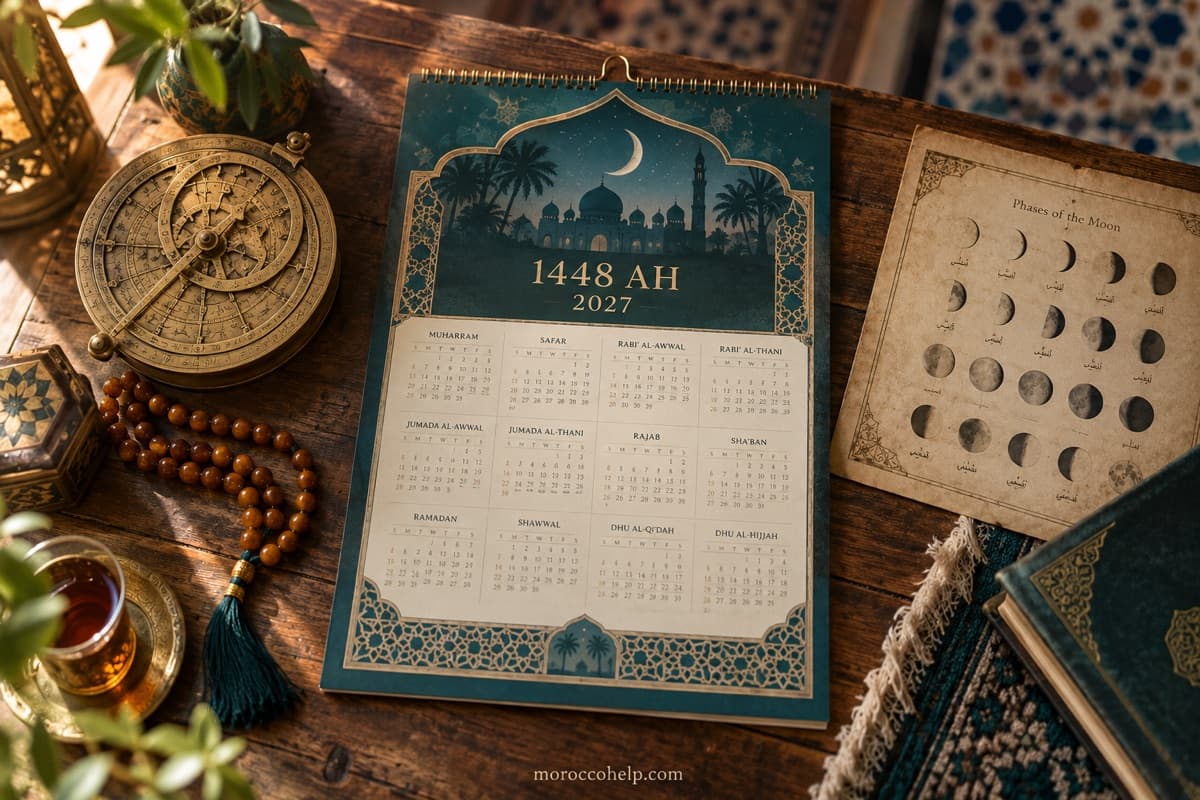
Eid al-Adha falls on the 10th of Dhul Hijja, the final month of the Islamic lunar calendar. For 2026, Morocco's Ministry of Habous and Islamic Affairs has officially confirmed that Eid al-Adha will be celebrated on Wednesday, May 27, 2026, corresponding to 10 Dhul Hijja 1447 AH.
The exact date is always confirmed one or two days before by the official moon-sighting committee in Morocco. The days of Eid al-Adha extend through the Ayyam al-Tashriq (11th, 12th, and 13th of Dhul Hijja), giving the celebration a span of four blessed days.
To stay on top of all Islamic dates and prayer schedules this year, you can use our Prayer Times tool which provides accurate daily prayer times for all Moroccan cities.
The Story Behind Eid al-Adha: Prophet Ibrahim's Trial
The spiritual foundation of Eid al-Adha rests on one of the greatest stories in Islamic tradition. Allah (SWT) commanded Prophet Ibrahim (AS) in a dream to sacrifice his son Ismail (AS). Both father and son, in an extraordinary display of tawakkul (trust in Allah) and submission, accepted the divine command without hesitation.
As Ibrahim was about to carry out the sacrifice, Allah replaced Ismail with a ram, revealing that the test was always one of faith and obedience, not of blood. Allah says in the Quran:
“And when he reached with him [the age of] exertion, he said, 'O my son, indeed I have seen in a dream that I [must] sacrifice you, so see what you think.' He said, 'O my father, do as you are commanded. You will find me, if Allah wills, of the steadfast.'”
This act of surrender is what every Muslim re-enacts spiritually during the udhiya (sacrifice), affirming that nothing we possess is too dear to surrender for the sake of Allah.
Qurbani (Udhiya) in Islam: Rules and Conditions
The qurbani, or udhiya, is the ritual animal sacrifice performed on Eid al-Adha and during the days of Tashriq. The majority of scholars consider it a strongly emphasized Sunnah (Sunnah Mu'akkadah), while some consider it obligatory (wajib) for those who are financially able.
Who Is Obligated to Perform Qurbani?
According to the Hanafi and Maliki schools, both widely followed in Morocco, qurbani is obligatory upon every adult Muslim who:
- Is sane and free
- Possesses wealth equal to or exceeding the nisab threshold (the same minimum for Zakat)
- Is a resident (not a traveler)
To understand your financial threshold for religious obligations, visit our Zakat Calculator for a comprehensive assessment.
Acceptable Animals for Qurbani
The animals permitted for sacrifice are:
- Sheep and goats: Must be at least one year old
- Cattle (cows and bulls): Must be at least two years old; one cow can serve as the qurbani for up to seven people
- Camels: Must be at least five years old; one camel also counts for seven people
The animal must be free from significant defects, it should not be blind, lame, extremely thin, or missing major parts of its ears or tail. Choosing a healthy, well-fed animal is recommended and reflects the spirit of offering one's best to Allah.
When to Perform the Sacrifice
The sacrifice begins after the Eid prayer on the 10th of Dhul Hijja and continues until sunset on the 13th of Dhul Hijja (the last day of Tashriq). The Prophet (PBUH) said:
"Whoever slaughters before the prayer, let him slaughter another in its place. And whoever has not slaughtered, let him slaughter in the name of Allah." — (Bukhari)
Performing the sacrifice on the first day, immediately after the Eid prayer, is the most virtuous time.
How to Distribute the Qurbani Meat
Islamic scholars, drawing from the Quran and Sunnah, recommend dividing the sacrificial meat into three equal portions:
- One-third for yourself and your family
- One-third for relatives, friends, and neighbors
- One-third for the poor and needy
Allah says in the Quran:
“So eat of them and feed the miserable and poor.”
This distribution ensures that the blessings of Eid reach every segment of society. In Morocco, it is common to see families delivering portions to elderly neighbors, orphanages, and local mosques for distribution to those in need.
The Eid Prayer: How It Is Performed
The Eid al-Adha prayer (Salat al-Eid) is a communal prayer performed on the morning of Eid, after sunrise and before the sun reaches its zenith. It consists of two rak'ahs with additional takbirat (verbal declarations of "Allahu Akbar"):
- First rak'ah: Seven additional takbirat after the opening takbir
- Second rak'ah: Five additional takbirat before the recitation
The Eid prayer is followed by a khutbah (sermon) in which the imam discusses the significance of the sacrifice and reminds the community of their obligations. In Morocco, the prayer is typically held in large open squares (musallas) or major mosques, with attendance reaching tens of thousands in cities like Casablanca, Rabat, Fes, and Marrakech.
Takbirat of Eid al-Adha
The takbirat, chanted from Fajr of the 9th of Dhul Hijja until Asr of the 13th, are among the most uplifting sounds of the season. The standard formula is:
اللَّهُ أَكْبَرُ، اللَّهُ أَكْبَرُ، لَا إِلَهَ إِلَّا اللَّهُ، وَاللَّهُ أَكْبَرُ، اللَّهُ أَكْبَرُ، وَلِلَّهِ الْحَمْدُ
Allahu Akbar, Allahu Akbar, La ilaha illallah, Wallahu Akbar, Allahu Akbar, Walillahil Hamd.
"Allah is the Greatest, Allah is the Greatest, there is no god but Allah, and Allah is the Greatest, Allah is the Greatest, and to Allah belongs all praise."
In Morocco, the streets fill with this chant beginning the night before Eid, with families reciting it aloud as they prepare for the celebration.
Eid al-Adha Traditions in Morocco
Morocco's celebration of Eid al-Kebir is rich with cultural and spiritual traditions that have been passed down across generations:
The Night Before Eid
Moroccan families spend the evening before Eid cleaning their homes, purchasing final supplies from the market, and preparing spices for the feast. Children often receive new clothes, and the anticipation fills every household with a festive spirit.
The Morning of Eid
Men and women dress in their finest traditional attire, djellabas and caftans, and make their way to the mosque or prayer square. After prayer, greetings of "Eid Mubarak" or "Eid Said" are exchanged with warmth.
The Sacrifice
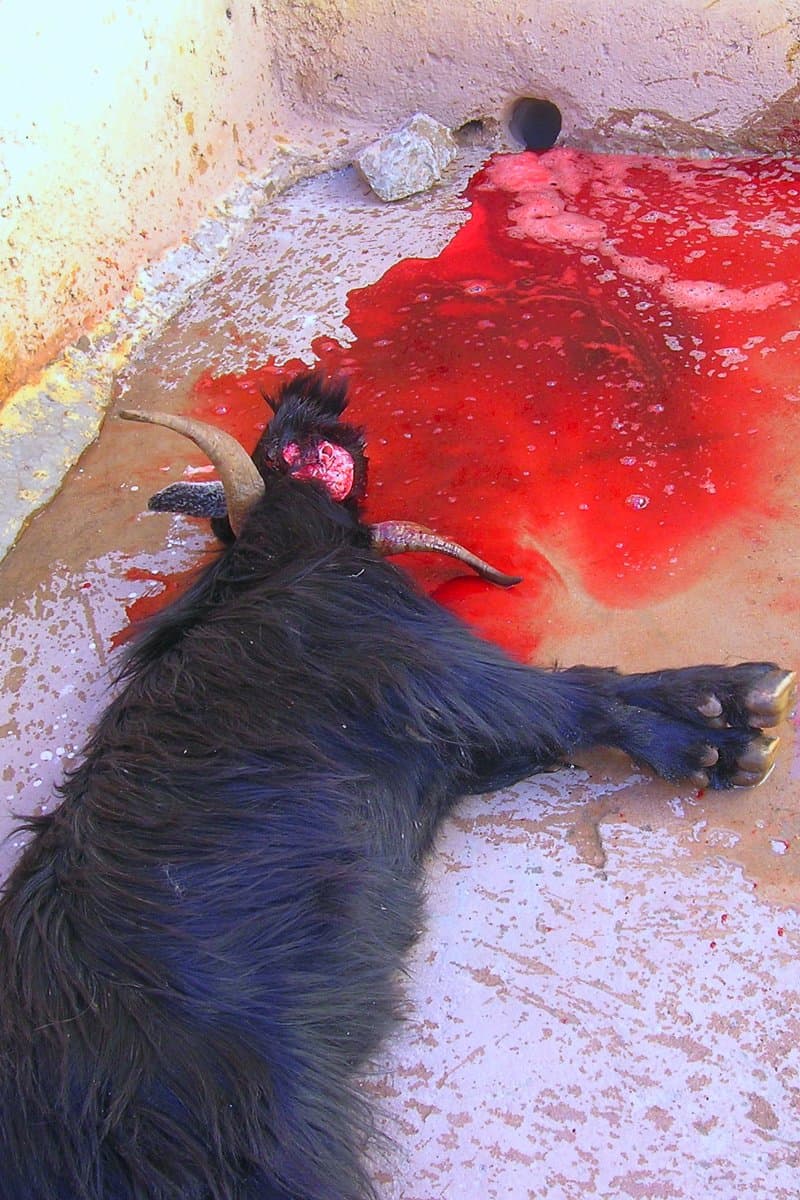
The head of the household typically performs the sacrifice, or arranges for a butcher (jazzar) to do so. It is recommended to say the basmalah and the following dua at the time of slaughter:
Bismillah, Allahu Akbar. Allahumma hadha minka wa lak. "In the name of Allah, Allah is the Greatest. O Allah, this is from You and for You."
The Feast
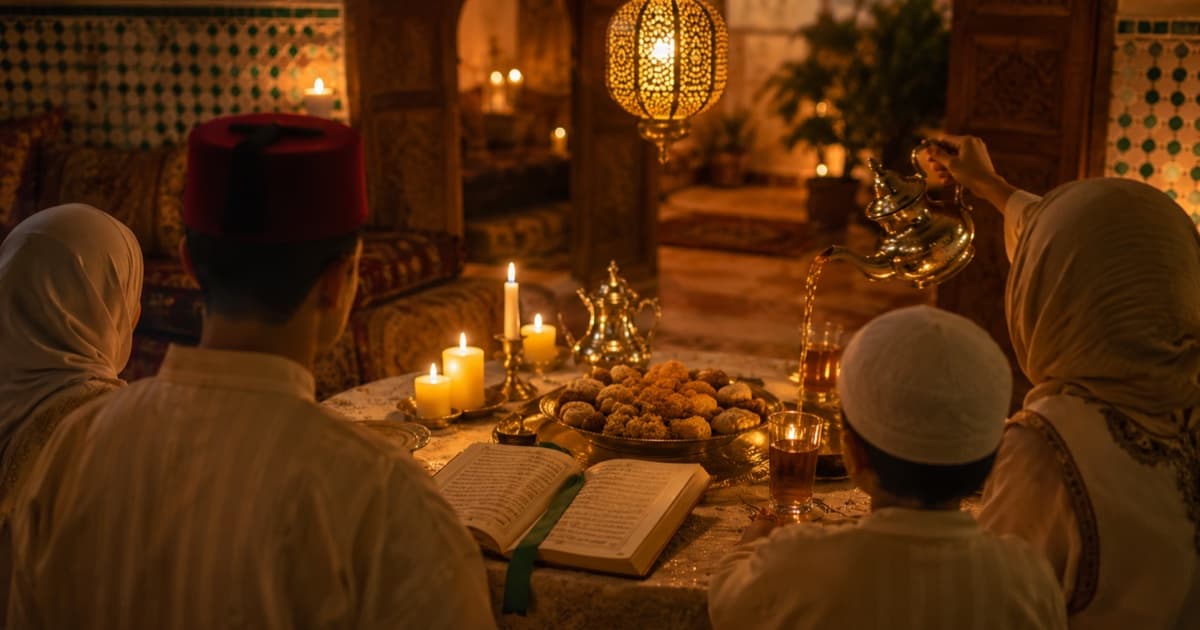
The liver (kibda) is traditionally the first part cooked and eaten, often grilled immediately after the sacrifice. Over the following days, families prepare mrouzia (a sweet-savory lamb tagine with raisins and almonds), tangia, couscous with lamb, and mechoui (slow-roasted lamb).
Community and Charity
Eid al-Kebir is deeply communal. Families visit one another, the elderly are honored, orphans are remembered, and charitable acts multiply. Many Moroccan families donate a portion of their meat to local associations and food banks.
Spiritual Reflection: The Deeper Meaning
Beyond the feast and festivities, Eid al-Adha calls us to examine what we are willing to sacrifice for the sake of Allah. Are we ready to give up our ego, our comfort, our time, and our wealth in service of our faith and our community? The udhiya is an outward ritual of an inward truth, that nothing belongs to us except what Allah has entrusted to us, and that His command takes precedence over everything.
May Allah accept our sacrifices, our prayers, and our fasting. May He bless Morocco and all Muslims with peace, prosperity, and His divine mercy this Eid al-Adha 2026.
Eid Mubarak / Eid Said!
Continue Reading
- Qurbani Checklist: Step-by-Step Practical Guide, From buying your sheep to meat processing and cleanup
- 7 Traditional Moroccan Eid Recipes, Boulfaf, mrouzia, mechoui, tangia, khlii and more
- Eid & Ashura FAQ: 20 Questions Answered, Common qurbani, prayer, and fasting questions
- Charity Planning for Eid & Ashura, Strategic zakat and sadaqah during the season of giving
- Traveling During Eid in Morocco, Prayer rules, traffic tips, and city guide
- Family Activities for Eid & Ashura, Teaching children Islamic values through activities
Stay informed about Islamic dates and prayer schedules in Morocco with our Prayer Times tool. Learn about your Zakat obligations with our Zakat Calculator.