Teaching Children About Eid Al-Adha & Ashura: Family Activities & Islamic Values
Islamic holidays are among the most powerful opportunities to pass down faith, values, and cultural identity to the next generation. Yet explaining concepts like sacrifice, fasting, and divine testing to young minds requires creativity and sensitivity.
This guide provides age-appropriate activities, storytelling approaches, and practical ideas for making Eid al-Adha and Ashura meaningful for the whole family, with a special focus on Moroccan traditions.
Why Early Islamic Education Matters
The Prophet (PBUH) said: "Teach your children prayer when they are seven, and discipline them for it when they are ten." — (Abu Dawud)
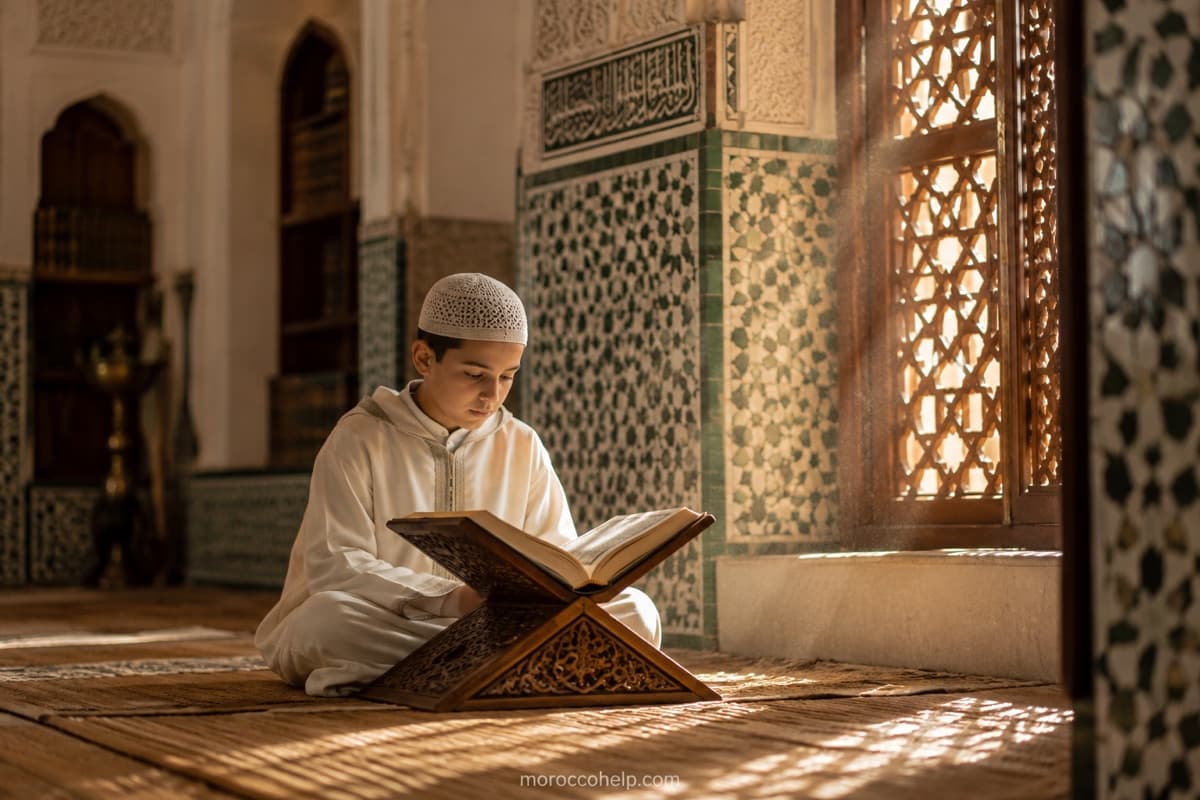
This principle extends beyond prayer. Children who grow up experiencing Islamic holidays, not just observing them, develop a deep, emotional connection to their faith. The goal is not to lecture, but to create joyful memories that anchor spiritual values.
For a broader introduction to the pillars of Islam for families, see our Five Pillars of Islam guide.
Telling the Story of Ibrahim (AS) for Eid Al-Adha
For Ages 4-7: The Simple Version
"A long time ago, there was a man named Ibrahim who loved Allah very much. Allah wanted to see how much Ibrahim trusted Him, so He asked Ibrahim to do something very hard. Ibrahim was sad, but he trusted Allah completely. And because Ibrahim was so brave and trusted Allah, Allah was very happy with him and gave him a wonderful reward. That's why we celebrate Eid, to remember that when we trust Allah and do what's right, even when it's hard, Allah always takes care of us."
Key messages for young children:
- Allah loves us and tests us to help us grow
- Trust in Allah always leads to something good
- Eid is a time for joy, family, and sharing
For Ages 8-12: The Full Story
Share the complete narrative from our Eid al-Adha guide, Ibrahim's dream, Ismail's brave acceptance, the divine intervention, and the ram. At this age, children can discuss:
- What does "sacrifice" mean in everyday life? (Giving up something you want for someone else)
- Have you ever had to do something hard because it was the right thing?
- Why do we share the meat with people who have less?
Discussion Questions
- "What is something you love very much? Would it be hard to give it up if Allah asked you to?"
- "Ibrahim and Ismail both said yes to Allah's plan. Who do you think was braver?"
- "When we share our Eid meat with poor families, how do you think they feel?"
Telling the Story of Musa (AS) for Ashura
For Ages 4-7
"Prophet Musa was leading his people to safety, but a mean king named Pharaoh was chasing them. They reached a huge sea and couldn't cross! But Musa asked Allah for help, and Allah made the sea split open so Musa and his people could walk through on dry land. When the mean king tried to follow, the sea closed again. That's why we fast on Ashura, to thank Allah for saving Musa and his people."
For Ages 8-12
Expand with details: the oppression of Banu Israel, the miracles of Musa, the courage of standing up to injustice, and the connection to the Prophet Muhammad (PBUH) who fasted on Ashura in gratitude. Explore the full story in our Ashura guide.
Discussion Questions
- "Musa stood up to a powerful king because it was the right thing. When is it hard to stand up for what's right?"
- "The people were scared at the sea, but Musa told them to trust Allah. What do you do when you're scared?"
- "Why do we thank Allah by fasting? What other ways can we show gratitude?"
Eid Al-Adha Activities for Children
1. Eid Countdown Calendar
Create a 10-day countdown for the first ten days of Dhul Hijja (the best days of the year). Each day, the child opens a door to find:
- A small treat or toy
- A good deed to perform that day
- A fact about Eid or Dhul Hijja
Use our Hijri Calendar to track the exact dates.
2. Eid Cards and Decorations
- Make handmade "Eid Mubarak" cards for grandparents, neighbors, and friends
- Decorate the house with crescents, stars, and "Allahu Akbar" calligraphy
- Create a "Thankfulness Tree" where each family member writes what they're grateful for
3. The Sharing Activity
When distributing the qurbani meat, involve children directly:
- Let them help pack the portions
- Take them along when delivering to neighbors
- Have them write notes to attach to the charity portions: "Eid Mubarak from our family to yours"
This teaches the Sunnah of meat distribution in a hands-on way. Learn about charity planning for Eid.
4. Cooking Together
Children love being in the kitchen. Age-appropriate tasks include:
- Threading boulfaf skewers (with supervision)
- Mixing spices for mrouzia
- Kneading dough for bread
- Decorating the Eid table
Ashura Activities for Children
1. The Moroccan Zamzam Water Tradition
In Morocco, Ashura is famous for the Zamzam water fights, children splash each other with water in the streets. This is a cherished tradition that makes Ashura one of the most anticipated days for Moroccan kids. Let children participate safely:
- Set up a water play area in the garden or courtyard
- Provide water balloons, cups, and spray bottles
- Explain the connection to water and the story of Musa crossing the sea
2. Making Ashura Sweets
Moroccan families prepare special treats for Ashura:
- Dried fruit and nut mixes: Let children assemble their own bags
- Fakya (mixed dried fruits and nuts): A traditional Ashura gift
- Simple cookies or msemen with honey
3. Taarija Drum Making
The taarija (small clay drum) is the iconic sound of Ashura in Morocco. Children love making and playing them:
- Buy small clay drums from the souk (available everywhere before Ashura)
- Or make DIY drums from containers and stretched fabric
- Learn simple rhythms together
- March through the neighborhood in a mini parade
4. Islamic Calendar Learning
Use Ashura as a starting point to teach children about the Islamic calendar:
- "Ashura is on the 10th of Muharram, the first month of our Islamic year!"
- Explore the Hijri Calendar tool together
- Let children mark important Islamic dates on a wall calendar
- Teach the names of the Islamic months through songs or rhymes
Charity Projects for Children
Teaching children about sadaqah (charitable giving) is one of the most important lessons of these holidays.
The Sadaqah Box
Create a family sadaqah box:
- Decorate a box together
- Each family member contributes coins or small bills regularly
- Before Eid, decide together where to donate: a mosque, an orphanage, or a family in need
- Let the child physically hand over the donation
Learn the difference between types of giving in our Sadaqah vs. Zakat guide.
The Kindness Challenge
During the 10 days of Dhul Hijja, challenge children to perform one act of kindness each day:
- Help a sibling with homework
- Make a card for a lonely neighbor
- Share a toy with a friend
- Help with household chores without being asked
- Say something kind to everyone they meet
- Donate old toys or books
- Help prepare food for a neighbor
- Call or visit grandparents
- Pick up litter in the neighborhood
- Fast for part of the Day of Arafah (age-appropriate)
Learning Duas, Takbirat, and the 99 Names
Eid Takbirat
Teach children the Eid takbirat through repetition and music:
اللَّهُ أَكْبَرُ، اللَّهُ أَكْبَرُ، لَا إِلَهَ إِلَّا اللَّهُ، وَاللَّهُ أَكْبَرُ، اللَّهُ أَكْبَرُ، وَلِلَّهِ الْحَمْدُ
- Practice together daily during Dhul Hijja
- Make it fun: clap along, march around the house, or sing it as a family
- Record the family reciting it together as a keepsake
The 99 Names Game
Use our 99 Names of Allah tool to play learning games:
- Name of the Day: Learn one name each day during Dhul Hijja
- Memory Match: Write names on cards and play matching games
- Story Connection: "Today's name is Ar-Rahman (The Most Merciful). Can you think of a time when Allah showed mercy to someone in a story?"
Simple Duas Before Eating
Teach the dua before and after eating, especially relevant during Eid meals:
- Before: "Bismillah" (In the name of Allah)
- After: "Alhamdulillah alladhi at'amana wa saqana wa ja'alana minal muslimeen"
Moroccan Family Heritage: Passing Down Traditions
Bilmawen / Boujloud
In the Souss region and the western High Atlas, the Bilmawen (Boujloud) festival takes place during Eid al-Adha. People wear animal hide costumes and masks, going door to door in a lively procession. For children:
- Explain it as a Moroccan tradition that celebrates the joy of Eid
- If your region celebrates it, take children to watch (from a safe distance for young ones)
- Let older children make simple masks as crafts
Djellaba Dress-Up
New clothes are part of the Eid tradition. Make it special:
- Let children choose their own djellaba or traditional outfit
- Take a family photo in traditional dress
- Talk about the significance: we wear our best for Allah's celebration
Family Couscous Making
Making couscous together is one of the most cherished Moroccan family activities:
- Teach children to hand-roll couscous (the traditional way)
- Show them the couscoussier and explain how steaming works
- Let them arrange the vegetables and meat on the serving platter
- Share the tradition that couscous is about family, it's always eaten together from one platter
Generational Storytelling
During Eid gatherings, encourage grandparents to share:
- How they celebrated Eid as children
- Stories of the family's history and heritage
- Duas and wisdoms passed down through generations
- The names and meanings behind family names (explore Islamic baby names together)
Making It Last: Beyond the Holiday
The goal is not just one great day, it's building a lifelong connection to Islam:
- Create a family Eid journal: Each year, write down what you did, what you cooked, who you visited, and what you're grateful for
- Establish family traditions: The same special dish, the same charitable act, the same relatives visited
- Connect holidays to daily life: "Remember how we shared our Eid meat? That's like sharing your lunch with a friend at school"
- Keep learning: Explore the Quran together, learn about the 99 Names of Allah, and read our blog for more Islamic knowledge
May Allah bless our families and raise our children upon the love of Islam, the Quran, and the Sunnah.
Learn more about the significance of Eid al-Adha and Ashura. Explore Islamic baby names and the 99 Names of Allah.