Eid Al-Adha & Ashura FAQ: 20 Common Questions Answered
Every year as Eid al-Adha and Ashura approach, Muslims across Morocco and the world have practical questions about how to observe these blessed occasions correctly. This FAQ compiles the most frequently asked questions with clear, scholarly answers rooted in the Quran and Sunnah.
For comprehensive guides on these occasions, see our Eid al-Adha 2026 Guide and Ashura 2026 Guide.
Qurbani (Sacrifice) Obligation Questions
1. Is qurbani obligatory (wajib) or Sunnah?
According to the Hanafi school, qurbani is obligatory (wajib) for every adult Muslim who possesses wealth at or above the nisab threshold on the days of Eid. According to the Maliki, Shafi'i, and Hanbali schools, it is a strongly emphasized Sunnah (Sunnah Mu'akkadah) that should not be neglected without reason. In Morocco, where the Maliki school prevails, it is treated as a strongly recommended act that most families perform. Use our Zakat Calculator to check if your wealth meets the nisab threshold.
2. Can I perform qurbani on behalf of a deceased parent or relative?
Yes. The majority of scholars permit performing a separate qurbani and dedicating its reward to a deceased person. The Prophet (PBUH) sacrificed a ram and said: "This is on behalf of Muhammad and the family of Muhammad" — (Muslim). Many scholars extend this to include the deceased. However, it should be in addition to your own qurbani, not a replacement.
3. Can I give money instead of performing the actual sacrifice?
The majority of scholars hold that the act of slaughter itself is the intended worship and cannot be replaced with a monetary donation. Giving money as sadaqah is praiseworthy but does not fulfill the qurbani obligation. However, you may appoint someone else (proxy) to perform the slaughter on your behalf, including an organization or butcher. See our guide on sadaqah vs. zakat for understanding different forms of giving.
4. What is the minimum financial threshold for qurbani to be required?
The threshold is the nisab, the same minimum wealth that makes Zakat obligatory. This is the value of 85 grams of gold or 595 grams of silver. If you own this amount (beyond your basic needs and debts) on the days of Eid, qurbani applies to you according to the Hanafi view. Calculate your nisab with our Zakat Calculator.
5. Can one qurbani count for an entire family?
Yes. A single sheep or goat suffices for one household (the person and their dependents). A cow or camel can be shared among up to seven people, each paying an equal share. This is based on the hadith of Jabir (RA) who said: "We slaughtered with the Prophet a cow for seven and a camel for seven." — (Muslim)
Qurbani Practical Questions
6. Can I freeze qurbani meat?
Yes. There is no prohibition on freezing the meat. The early Muslims dried and preserved meat (a practice called qadeed). The Prophet (PBUH) initially restricted keeping meat beyond three days but later lifted this restriction, saying: "I had forbidden you from storing the meat of sacrifice beyond three days so that there would be enough for everyone. Now eat, store, and give in charity." — (Muslim)
7. Can a woman perform the qurbani slaughter herself?
Yes. There is scholarly consensus that a Muslim woman may slaughter the animal herself if she is able. The condition is that the person slaughtering must be a sane Muslim who says "Bismillah, Allahu Akbar" at the time of slaughter. Gender is not a restriction.
8. What time does the qurbani window begin and end?
The sacrifice is valid after the Eid prayer on the 10th of Dhul Hijja until sunset on the 13th of Dhul Hijja (the last day of Ayyam al-Tashriq). Slaughtering before the Eid prayer is not valid as qurbani, the Prophet (PBUH) said: "Whoever slaughters before the prayer, it is only meat for his family." — (Bukhari). Check your local prayer times to plan accordingly.
9. Which direction should the animal face during slaughter?
The animal should be laid on its left side, facing the Qibla (the direction of Makkah). Use our Qibla Finder to determine the exact direction from your location. The slaughterer says: "Bismillah, Allahu Akbar. Allahumma hadha minka wa lak."
10. What if the animal dies accidentally before it can be properly slaughtered?
If the animal dies before you are able to slaughter it (e.g., it falls and breaks its neck), it does not count as a valid qurbani. You must obtain and sacrifice another animal if you are still within the valid time window. If the window has passed and you were unable due to no fault of your own, many scholars say the obligation is lifted.
Eid Prayer Questions
11. What if I miss the Eid prayer?
The Eid prayer is not obligatory (fard) according to the majority, it is a strongly emphasized communal Sunnah. If you miss it, you may pray it individually as two rak'ahs with the extra takbirat, though scholars differ on whether the additional takbirat apply when praying alone. The sacrifice itself is not dependent on attending the prayer. See our Prayer Times tool for Eid prayer schedules in your city.
12. Should women attend the Eid prayer?
The Prophet (PBUH) encouraged women to attend, even menstruating women (who observe but do not pray). He said: "Let them witness the goodness and the gathering of the Muslims." — (Bukhari & Muslim). In Morocco, many families attend together at the musalla (open-air prayer ground).
13. How many takbirat are in the Eid prayer?
The Maliki school (followed in Morocco) prescribes seven takbirat in the first rak'ah (after the opening takbir) and five takbirat in the second rak'ah (before recitation). There are minor differences between schools, but this is the standard practice in Moroccan mosques.
Grooming Restrictions
14. Is it haram to cut nails or hair before the sacrifice?
If you intend to perform a qurbani, you are advised to refrain from cutting your hair and nails from the 1st of Dhul Hijja until the sacrifice is completed. The Prophet (PBUH) said: "When the ten days of Dhul Hijja begin and one of you intends to sacrifice, let him not touch his hair or skin." — (Muslim). This applies to the person offering the sacrifice, not to the entire family. For more on Dhul Hijja practices, see our First 10 Days of Dhul Hijja guide.
15. Does this restriction apply if someone else is performing the sacrifice on my behalf?
Scholars differ. The Hanbali position is that the restriction applies only to the one who intends to sacrifice. If you have delegated your qurbani to an organization or another person, many scholars hold that you are still the one intending, so the restriction applies to you. It is best to observe it out of precaution.
Ashura Fasting Questions
16. Can I fast only on the 10th of Muharram (Ashura) without the 9th?
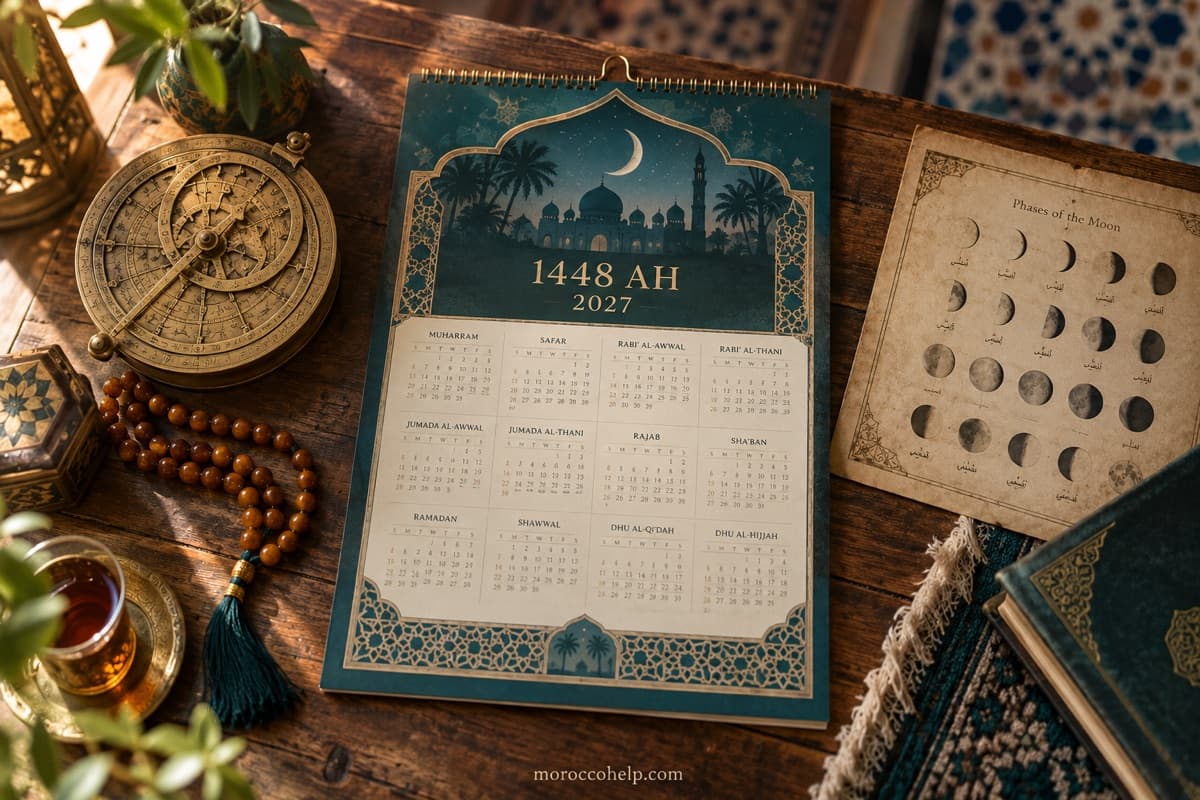
Yes, fasting only on the 10th is valid and earns the reward of expiating the sins of the previous year as stated in the hadith (Muslim). However, the Prophet (PBUH) expressed his intention to also fast the 9th (Tasu'a) to distinguish from the practice of the People of the Book. It is therefore recommended to fast both the 9th and 10th. See our Ashura 2026 guide for full details. Track Islamic dates with our Hijri Calendar.
17. Can I fast Ashura as a make-up for missed Ramadan fasts?
Scholars differ on this. The Shafi'i and Hanbali schools allow combining intentions, fasting a make-up fast on Ashura and receiving both rewards. The Hanafi and Maliki schools generally say you receive the reward for the make-up fast but may miss the specific Ashura reward. It is best to fast Ashura separately if possible.
18. Is it recommended for children to fast on Ashura?
Children are not obligated to fast, but many families gently encourage older children to try. The Companions used to have their young children fast on Ashura, giving them toys to distract from hunger (Bukhari). This should be age-appropriate and never forced.
Charity and Zakat Tie-In
19. Does qurbani replace the obligation of Zakat?
No. Qurbani and Zakat are separate obligations. Zakat is one of the Five Pillars of Islam and is calculated on wealth held for a full lunar year above the nisab. Qurbani is specific to Eid al-Adha. Both should be fulfilled independently. Use our Zakat Calculator to calculate your zakat, and read our Zakat al-Mal guide for detailed instructions.
20. Is there a special virtue to giving charity on Ashura?
Yes. The Prophet (PBUH) said: "Whoever is generous to his family on the day of Ashura, Allah will be generous to him for the rest of the year." — (Bayhaqi, graded hasan by some scholars). In Morocco, Ashura is traditionally a time when families distribute zakat, give gifts to children, and support orphans. Learn more about the difference between sadaqah and zakat.
Have more questions? Explore our blog for in-depth guides on Islamic practices. Use our Prayer Times, Zakat Calculator, and Qibla Finder tools for your daily worship needs.