Morocco's Islamic Heritage: Zawiyas, Sufi Traditions & Spiritual Legacy
For over twelve centuries, Sufism (Tasawwuf) has been the beating spiritual heart of Morocco. From the luminous zawiyas (spiritual lodges) nestled in the ancient medinas to the melodious dhikr gatherings that echo through Moroccan nights, Sufi traditions have shaped the kingdom's religious identity, social fabric, and cultural heritage in ways that remain profoundly alive today.
Morocco is widely regarded as one of the most Sufi-influenced nations in the Islamic world. The kingdom's unique model, where Sufi brotherhoods (turuq) coexist within the framework of Maliki jurisprudence and Ash'ari theology under the guidance of the monarchy, has created a spiritual landscape unlike any other.
What Is a Zawiya?
A zawiya (plural: zawaya) is a Sufi spiritual center that serves multiple functions:
- Place of worship: Daily prayers, Friday sermons, and special religious observances
- Center of learning: Quran memorization, Islamic sciences, and spiritual education (tarbiya)
- Community hub: Charitable distribution, hosting travelers, and community gatherings
- Shrine (darih): Many zawiyas contain the tomb of a founding saint (wali), becoming sites of ziyara (visitation)
- Dhikr gathering place: Regular sessions of remembrance of Allah through chanting, recitation, and meditation
The zawiya system is one of the oldest institutional forms of Islamic education and community organization in North Africa, predating the modern madrasa system by centuries.
The Major Sufi Orders (Turuq) of Morocco
The Qadiriyya Order
The Qadiriyya is one of the oldest Sufi orders in the Islamic world, tracing its spiritual lineage to Abd al-Qadir al-Jilani (1077–1166 CE), the great scholar and mystic of Baghdad. The order spread to Morocco during the Almohad and Marinid periods and established zawiyas across the country, particularly in the northern regions.
The Qadiriyya in Morocco emphasizes:
- Strict adherence to Sharia alongside spiritual practice
- Generosity and service to the poor
- The practice of dhikr (both silent and vocal)
- Education and scholarship
The Tijaniyya Order
Founded by Ahmad al-Tijani (1737–1815 CE), who established his order in Fez after settling there in 1798, the Tijaniyya has become one of the most influential Sufi orders in Morocco and across West Africa. The Tijani Zawiya of Fez, located in the heart of the old medina, remains the spiritual headquarters of the order.
The Tijaniyya is distinguished by:
- The Wazifa (litany) and Dhikr al-Jum'a (Friday dhikr), specific recitations practiced by Tijani disciples
- A strong emphasis on the Prophet Muhammad's (PBUH) spiritual presence (hadra)
- An intellectual tradition that engages with Maliki jurisprudence and Ash'ari theology
- Extensive influence across sub-Saharan Africa, making the Fez zawiya a site of international pilgrimage
The Boutchichiyya Order
The Boutchichiyya (also spelled Butshishiyya) is one of the most prominent contemporary Sufi orders in Morocco. Based in the village of Madagh in the Berkane province (eastern Morocco), the order traces its spiritual lineage through the Qadiriyya but has developed its own distinctive approach under the leadership of the Boutchich family.
The order is known for:
- Silent dhikr (dhikr al-khafi), internal remembrance of Allah rather than vocal chanting
- A large and growing following among Moroccan youth and urban professionals
- A focus on love (mahabba) as the central spiritual experience
- Strong engagement with contemporary social issues while maintaining traditional practices
The annual moussem (spiritual festival) of the Boutchichiyya in Madagh draws hundreds of thousands of visitors each year, making it one of the largest religious gatherings in Morocco.
The Darqawiyya Order
Founded by Mawlay al-Arabi al-Darqawi (1760–1823 CE) in the Rif mountains of northern Morocco, the Darqawiyya order emerged as one of the most influential Sufi brotherhoods in North Africa. Drawing from the spiritual lineage of the Shadhiliyya-Jazuliyya chain, the Darqawiyya emphasizes simplicity, spiritual poverty (faqr), and direct experiential knowledge of God.
The order rose to prominence in the late 18th and 19th centuries, becoming a powerful social and political force across Morocco. Despite periods of tension with the Makhzen (the ruling establishment), the Darqawiyya maintained its spiritual vitality and continues to practice today.
The Darqawiyya is distinguished by:
- Spiritual poverty (faqr), The voluntary embrace of simplicity and detachment from worldly possessions as a path to spiritual freedom
- Vocal dhikr, Loud, rhythmic recitation of God's name, often accompanied by body movements expressing spiritual ecstasy
- Rural and mountain roots, Unlike the more urban orders, the Darqawiyya drew much of its following from the Rif, the Atlas, and southern Morocco
- Resistance and reform, The order played a role in resistance movements against colonial powers, reflecting its emphasis on spiritual authenticity
Key Darqawi zawiyas can be found in the Rif mountains, Fez, and throughout northern and central Morocco. The order's influence also spread to Algeria, Mauritania, and the Hijaz through traveling disciples (khulafa').
The Wazzaniyya Order
Based in the town of Ouezzane in northern Morocco, this order was founded by Moulay Abdallah al-Sharif and remains one of the most influential zawiyas in Morocco. Historically known as the Zawiya of the Seven Saints (Sab'at Rijal), it has played a major role in spreading Islam throughout West Africa.
Famous Zawiyas of Morocco
Zawiya Moulay Idriss II, Fez
The Zawiya of Moulay Idriss II in the heart of the Fez medina is one of the most sacred sites in Morocco. Moulay Idriss II founded the city of Fez in the early 9th century and is revered as the father of the Moroccan state. His shrine has been a site of pilgrimage for over a thousand years. The current structure, rebuilt in the 18th century by Sultan Moulay Ismail, features stunning carved cedar, intricate zellige tilework, and a green-tiled minaret that marks the skyline of Fez.
Zawiya Moulay Idriss Zerhoun
Perched on a hilltop overlooking the Roman ruins of Volubilis, this zawiya is dedicated to Moulay Idriss I, the founder of the first Islamic dynasty in Morocco and a descendant of the Prophet Muhammad (PBUH). The annual moussem here draws tens of thousands of pilgrims from across the kingdom.
Zawiya of Sidi Ahmed Tijani, Fez
The spiritual headquarters of the Tijaniyya order, this zawiya contains the tomb of Sheikh Ahmad Tijani and is a major pilgrimage destination, especially for followers from West Africa. The complex includes a mosque, library, and quarters for visiting disciples.
Zawiya of Sidi Abdelkader Jilani, Casablanca
One of the most visited zawiyas in Casablanca, dedicated to the spirit of the great Qadiri saint, it serves as an active center of worship, learning, and charitable work in the Hay Mohammadi neighborhood.
Zawiya of Ouezzane
The Zawiya of Ouezzane in the Rif foothills is among the most influential in Morocco. It played a pivotal role in the Islamization of West Africa and continues to be a center of spiritual learning. The town of Ouezzane itself is known as a "city of saints" due to its concentration of holy sites.
The Moussem: Morocco's Spiritual Festivals
A moussem is an annual religious and cultural festival held in honor of a saint or spiritual figure. These gatherings combine spiritual practices (dhikr, prayer, sermons) with cultural celebrations (music, poetry, craftsmanship, and trade).
Notable Moussems
| Moussem | Location | Significance |
|---|---|---|
| Moussem of Moulay Idriss Zerhoun | Near Meknes | Honors Morocco's founding saint |
| Moussem of the Boutchichiyya | Madagh, Berkane | Largest contemporary Sufi gathering |
| Festival of Sufi Culture | Fez | Annual international celebration of Sufi music, poetry, and thought |
| Moussem of Tan-Tan | Southern Morocco | UNESCO-recognized cultural gathering of nomadic tribes |
| Moussem of Imilchil | Atlas Mountains | Marriage festival rooted in Berber-Islamic traditions |
The Fez Festival of Sufi Culture
The Fez Festival of Sufi Culture (Festival de la Culture Soufie), held annually in the spiritual capital of Morocco, is one of the world's premier events dedicated to Sufi heritage. The festival features:
- Sama'a performances: Spiritual concerts featuring Sufi music and chanting from orders around the world
- Academic symposiums: Scholars discuss Sufi philosophy, ethics, and contemporary relevance
- Art exhibitions: Calligraphy, geometric art, and manuscript displays
- Dhikr sessions: Open gatherings where attendees experience Sufi remembrance practices
- Poetry readings: Classical Arabic and Amazigh poetry celebrating divine love
The festival draws participants from over 40 countries and has become a bridge between Morocco's spiritual heritage and the global community.
Sufism and Moroccan Daily Life
The influence of Sufism extends far beyond the zawiyas and into the daily rhythms of Moroccan life:
Education
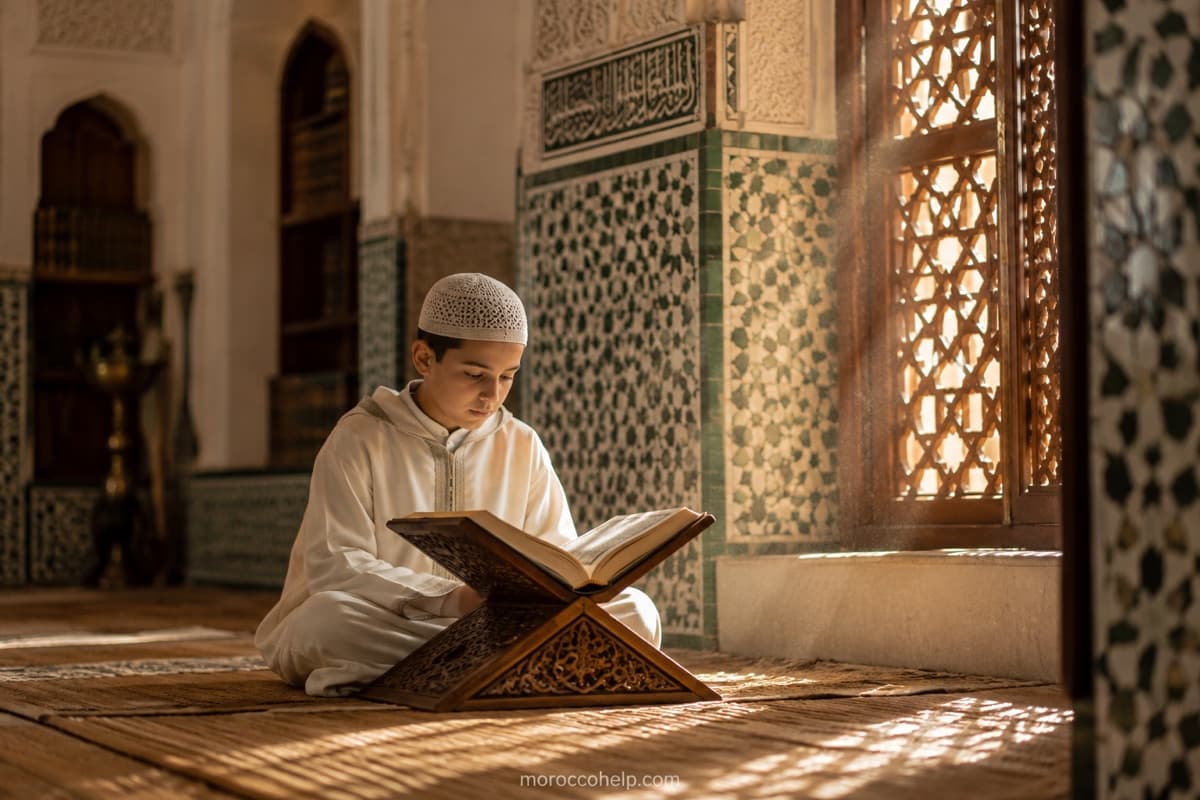
Many Moroccan children receive their first Quranic education at a zawiya, learning to read the Quran, memorize short surahs, and understand basic Islamic principles under the guidance of a fqih (religious teacher).
Charity
Zawiyas have historically been, and remain, among the most important charitable institutions in Morocco. They distribute food during Ramadan, provide support to widows and orphans, and offer emergency assistance to those in need.
Conflict Resolution
Sufi shaykhs and muqaddams (local leaders) often serve as mediators in community disputes, drawing on the spiritual authority of their position to facilitate reconciliation.
Music and Art
The Gnawa tradition of Morocco, a rich musical and spiritual heritage with roots in sub-Saharan Africa, has deep connections to Sufi practice. The annual Gnawa World Music Festival in Essaouira celebrates this unique fusion of African rhythms and Islamic spirituality.
Architecture
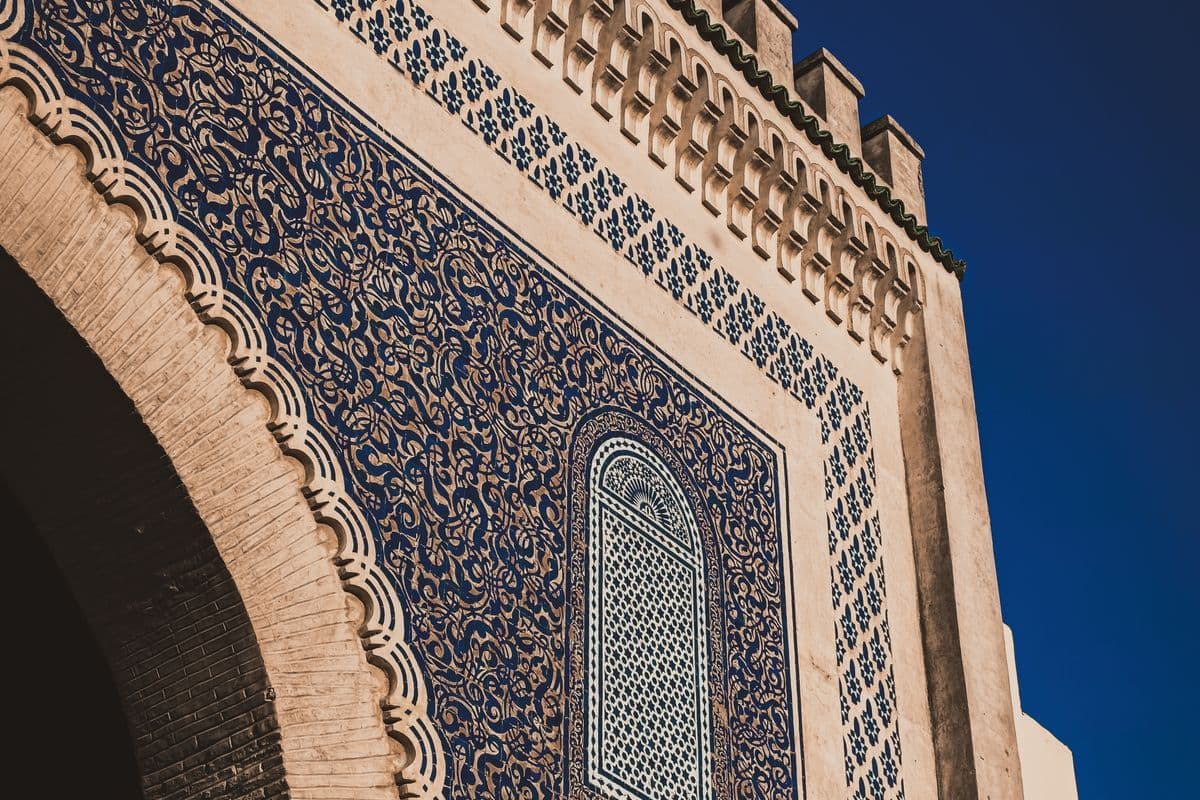
The design of zawiyas, with their courtyards, fountains, prayer halls, and guest quarters, has influenced Moroccan domestic architecture for centuries. Elements like the central courtyard (wast al-dar), the use of geometric patterns, and the integration of water features all have spiritual as well as aesthetic significance.
The Role of Sufism in Modern Morocco
Morocco's monarchy has consistently supported the Sufi tradition as a pillar of the kingdom's religious identity. The Supreme Scientific Council and the Ministry of Habous and Islamic Affairs work closely with Sufi orders to:
- Promote a moderate, tolerant expression of Islam
- Counter extremist ideologies through spiritual education
- Preserve Morocco's intangible cultural heritage
- Strengthen ties with African nations through shared Sufi traditions
The Mohammed VI Foundation of African Oulema actively engages with Sufi networks across the continent, positioning Morocco as a center of moderate, spiritually rich Islamic scholarship.
Conclusion: A Living Legacy
Morocco's Sufi heritage is not a relic of the past preserved in museums. It is a living, breathing tradition that shapes the daily lives of millions of Moroccans. From the qari (Quran reciter) who learned his craft at a zawiya, to the grandmother who makes ziyara to Moulay Idriss every year, to the young professional who attends dhikr gatherings on weekends, Sufism in Morocco is an integral part of what it means to be Moroccan and Muslim.
The zawiyas, moussems, and Sufi orders of Morocco remind us that Islam is not merely a set of rules and obligations, but a path of love, knowledge, and spiritual transformation that has the power to elevate both the individual soul and the collective community.
Continue Reading
- Darqawi Zawiya Morocco: The Rif's Spiritual Brotherhood, Explore the Darqawiyya order's history, zawiyas, and living traditions
- Zawiya Tijaniyya Fez Morocco: A Guide to the Spiritual Heart of the Tijaniyya, Discover the Tijani Zawiya of Fez in depth
- Famous Mosques in Morocco: History and Architecture, Explore Morocco's architectural masterpieces
- Five Pillars of Islam: Complete Guide, The foundation of Islamic practice
- Prayer Times in Morocco 2026, Daily prayer schedules for all cities
Use our Prayer Times tool and Zakat Calculator to support your daily Islamic practice.